Blog
Contents
Welcome to the Real Plastic Free blog page. It is still very much in its development stages, but we were all keen to share with you thoughts, tips and information from various members of the team.
-
'Dear Plastic free Diary'
-
Your guide to living plastic free
-
Guide to Pulses
-
Guide to Grains
-
How to cook guides
-
How to cook Amaranth Seed
-
How to cook Roasted Buckwheat Kasha
-
How to cook Chickpeas
-
How to cook Red Lentils
-
Plastic free snacks
Updated June 2026 Sian
Going plastic-free as a young family is tough. So many kids’ snacks come in plastic wrapping and finding time to make everything from scratch instead is often near impossible, but we’re ready to take on the challenge. We’ve set ourselves the goal of radically reducing our plastic use this year. We’ve been thinking about it for some time but it took our six-year-old daughter coming home from school looking upset and worried after watching David Attenborough’s now-famous Blue Planet episode to get us to take the leap. Her naive logic made us think - she just couldn’t get her head around why we couldn’t all immediately stop using plastic if it meant we were hurting animals. So we’ve promised her we will go on our own crusade against plastic.
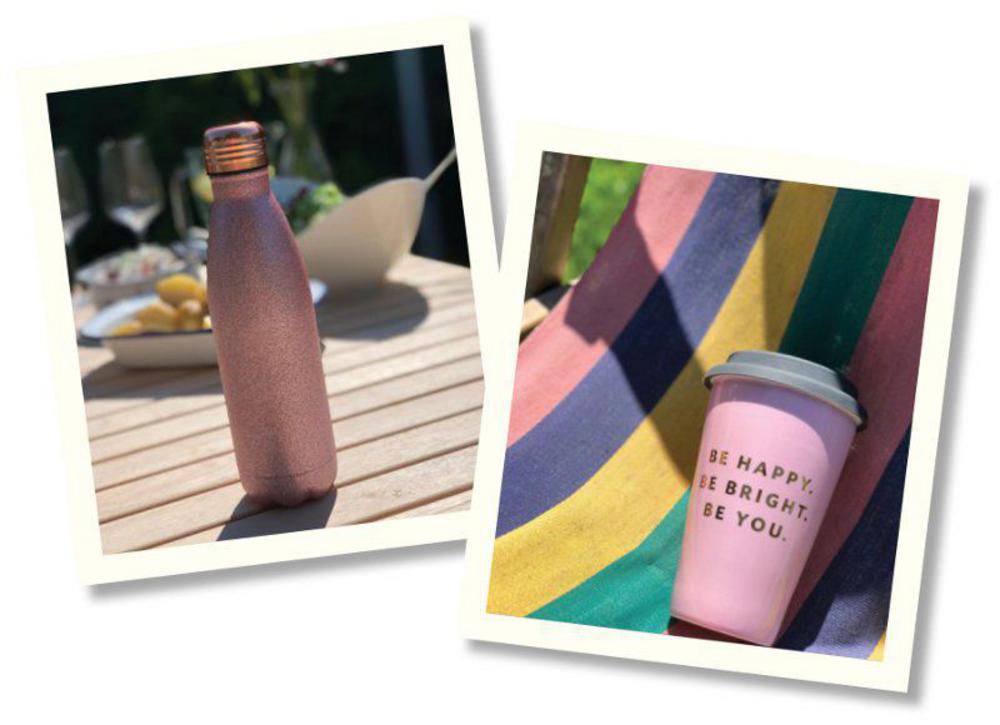
Step one involves pink. We’re ditching the takeaway cups and single-use water bottles and if we’re going to do it, we’re going to do it in sparkly style. So we now have a pink sparkly water bottle each and I kept the theme going with a pink keep cup. Daddy had no choice but to concede to a purple cup and bottle. Our first small change and our journey to plastic-free is off to a great start.
We’ve set ourselves a plastic-free challenge as a family and although it’s still early days, we’re enjoying learning how to cut down on plastic one step at a time. We’re keeping it simple and fun so that our children come along for the ride with us and make these changes for the rest of their lives.
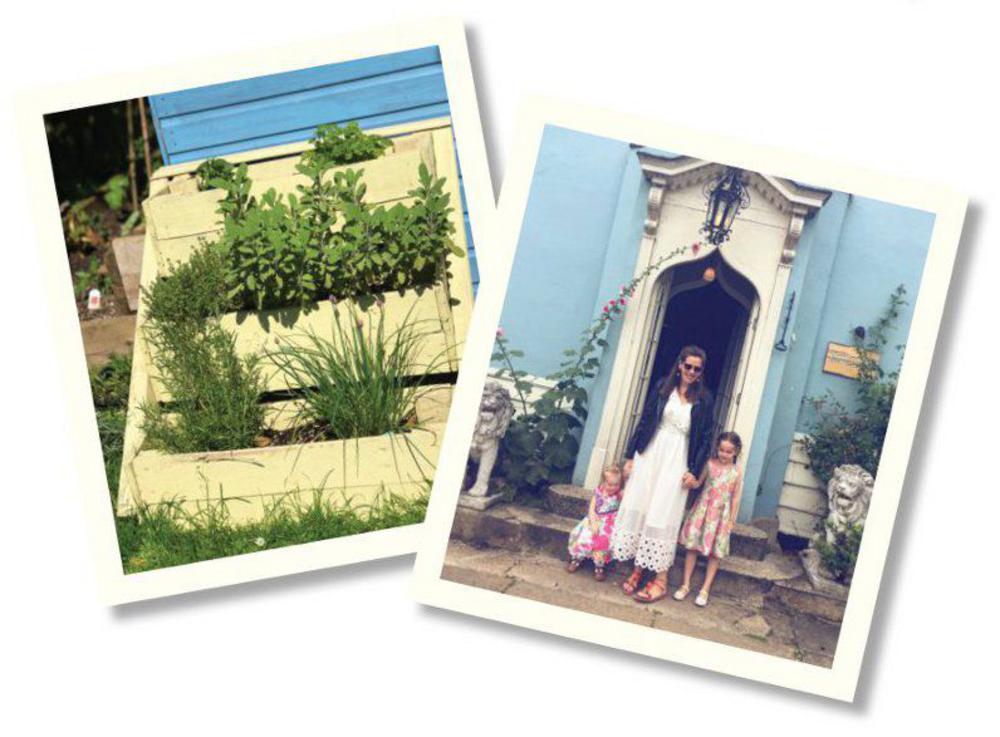
In the spirit of getting us all involved, step 2 was a spot of DIY. We had great fun at the weekend setting ourselves up a small vegetable plot in our garden. We used some old sleepers we had from some recent building work and some stakes we had going spare to make our wigwam. We’ve planted cucumbers, peppers, runner beans, peas and runner beans. And of course, we’ve hung some strawberry plants up too for little hands to pick at as they check on the plot.
A few staples and a few seasonal specials - all of which would often come wrapped in plastic if we bought them at the supermarket. The children loved learning how to plant up our small saplings and are very enthusiastic about watering our new veggie plot. It proved to be a great family project and another tick on the plastic-free living chart.
When it comes to going plastic-free, I couldn’t let the children have all the fun - they’ve helped us create the perfect mini veggie plot - but now it’s my turn to get planting. I am an enthusiastic home-cook and love to create healthy meals for the family which I can make without slaving away for hours. Herbs play a big part in this - from ribbons of basil in our no-cook, raw tomato sauce or sage on top of simply ravioli - herbs add all the flavour without adding any nasties.
So, step 3, Project Herb Garden is a vital part of our journey. In the past, I have been guilty of ordering the odd pack of herbs each week - all wrapped in plastic for no reason whatsoever. Never again. So, the girls’ grandad got handy with an old pallet and whipped me up some stepped planters for my herbs. I am over the moon - thyme, sage, rosemary, chives and mint are now all growing and flourishing in a nice sunny spot in our garden. Now to get the girls on the watering and put my feet up. Mojito anyone?
We’re ramping up our plastic-free living a notch this week. It’s time to ditch the plastic-wrapped snacks and make our own. Although as soon as you try to tackle one ‘free’ living issue, another comes along. Sugar is a problem when it comes to kiddie snacks and so it’s not as easy as whipping up some cupcakes and slapping on the icing. Both of our girls need to take in healthy lunch boxes and that means no sweets, no chocolate and full-on cake is frowned upon.
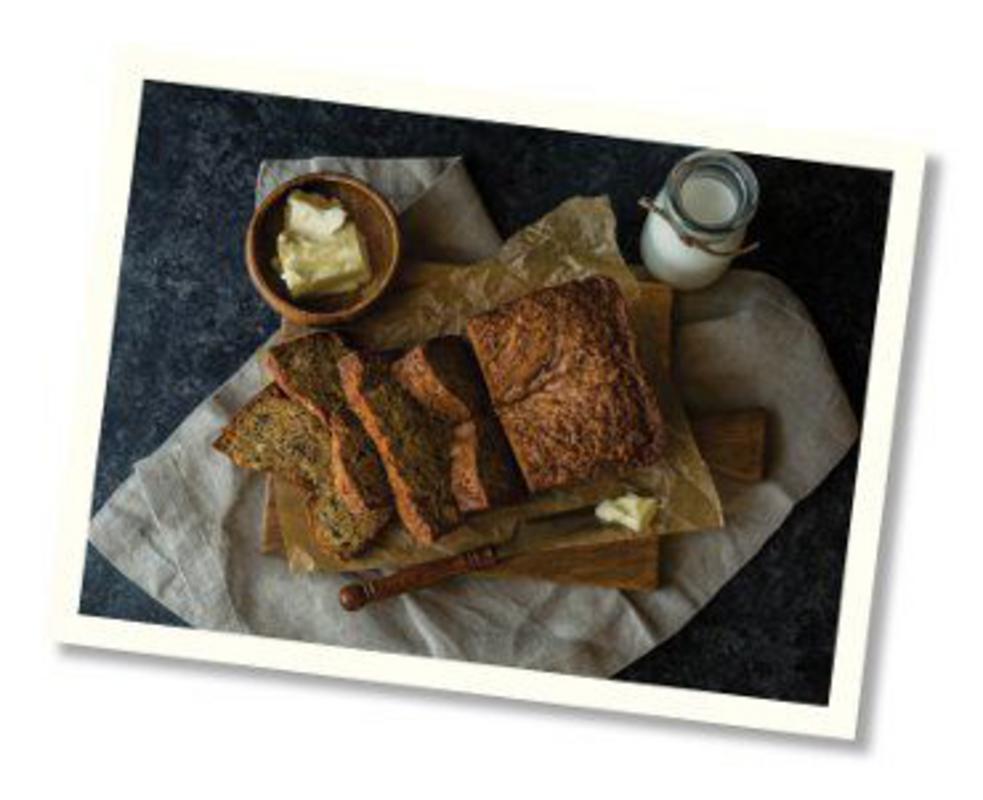
A sugar-laden treat is fine for the weekend but it’s no good for weekday lunch fuel. Add to that that both schools are also a nut-free zone and so nut butters are out too. So we went for banana bread with lower sugar and used agave syrup for sweetness instead. I wrapped up both girls portions in parchment paper for three days running and then toasted some with cinnamon butter and strawberries for a weekend brunch treat. All in all - another plastic-free success.
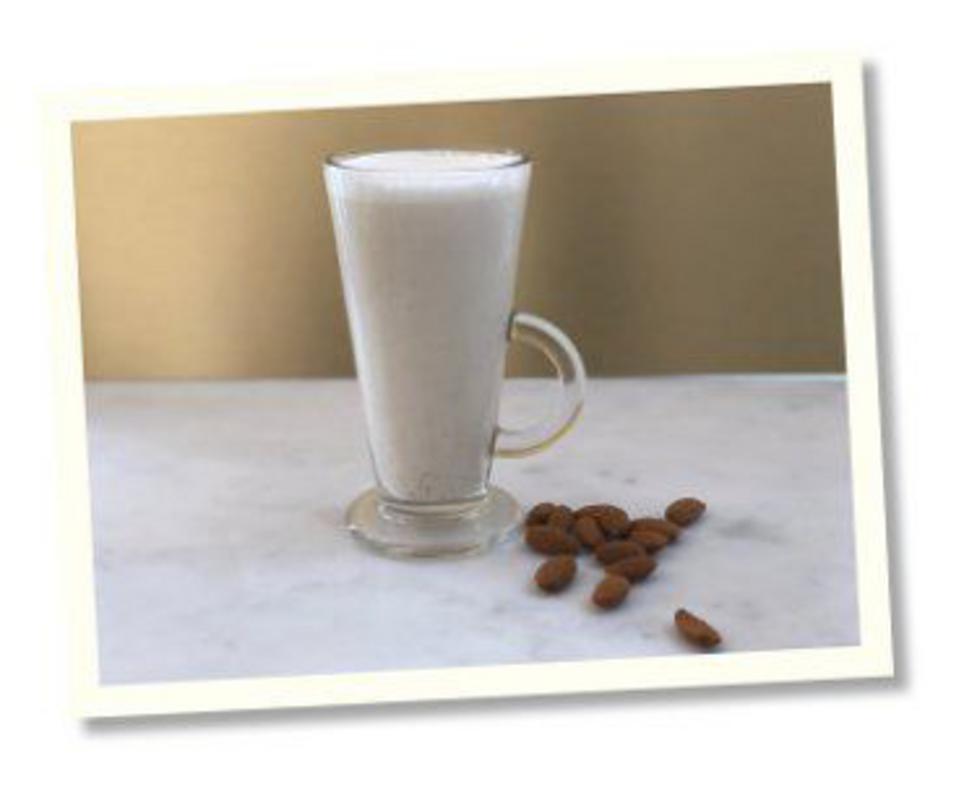
My favourite new coffee discovery when it comes to using my new keepcup is a delicious almond milk latte. I love the creaminess of the almond milk and our ventures into plastic-free have definitely taken us along the plant-based living route as well. But of course, most almond milks come in a plastic-lined carton. So, now that I can’t live without it, I decided to make my own. It was simple enough and I was chuffed with the result. In short, you soak your almonds in water for 2-3 days, drain, add fresh water and blend until smooth.
The next step is to strain your milky mixture through a clean muslin and enjoy! I certainly did; I enjoyed almond milk lattes at home and replaced cows milk with almond on my cereal. I would highly recommend it. Next stop: cashew milk!
Hands up; I love shopping. A good rummage in the clothes shop, a restock of the kitchen cupboards or a fancy new rug for the lounge - I love it all. But I’ve found that going plastic-free largely means cutting down on my guilty consumer habits. Or so I thought until I discovered that I can still make guilt-free and fun-filled purchases. I discovered Batoko online and was attracted to their bright and colourful swimsuit designs.
When I saw that firstly they were made of recycled plastic and most importantly of all - they come in matching adult and children’s designs, I was hooked. Three cossies were in the basket and purchased in 20 seconds flat! The story behind the brand is that they create their funky swimwear from post-consumer PET plastic, such as bottles, fishnets and carpet. Ingenious huh? The old plastic is shredded and melted and then spun into polyester yarn. There are roughly 10 plastic bottles per swimsuit and they have used around 106,000 plastic bottles so far. Now that’s some seriously clever recycling and shows just what can be done with a little bit of thinking outside the (plastic) box.

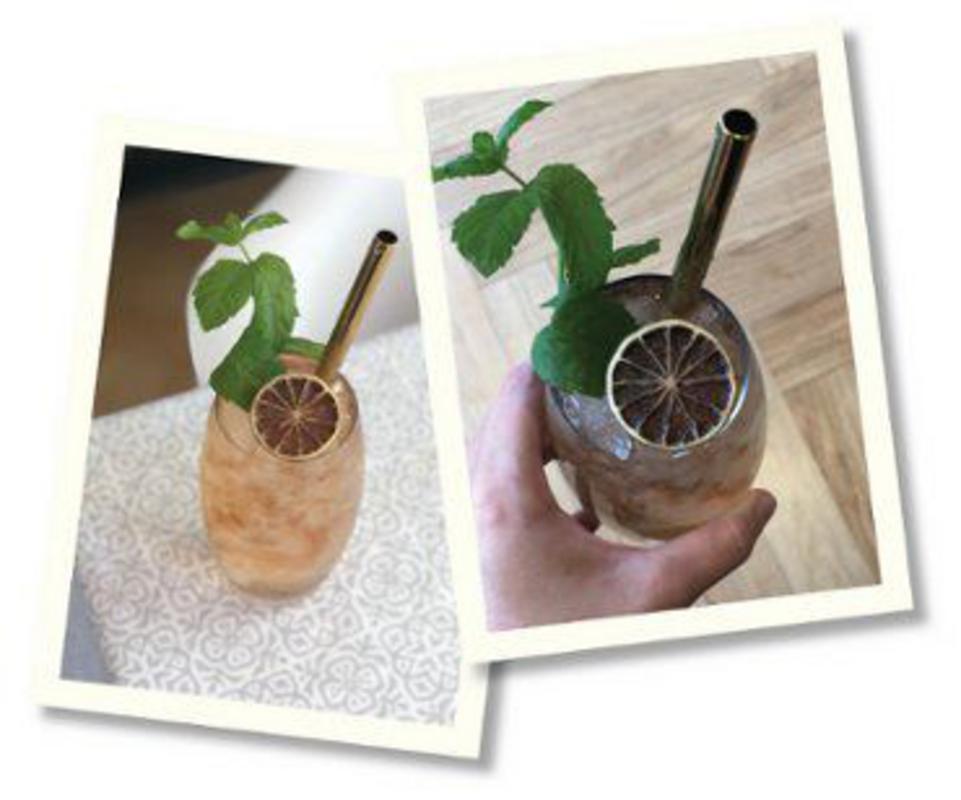
Moving through our plastic-free journey has been fascinating. As a family we have learnt so much and taken many steps to get move us towards a plastic-free lifestyle. For example, if you’d have told me a few months ago that I would be carrying around cups and reusable straws in my bag I might have laughed. But that’s been my next small step this month - a rather chic golden straw that I now carry in my bag so that I can say no to a plastic straw. I have to admit that my shopaholic tendencies did come out again and I did buy more than one of these beauties but just look at my cocktails now...the gold straw is just perfection. Another plastic-free win which has made my life better in more ways that one.
The jump from straws to cutlery was a small one and so when splashing out on my fancy straws, I also added some take away cutlery too. We love getting out and about outdoors as a family and so we often have picnics. I have cheerily picked up the plastic cutlery, wrapped in plastic cellophane many times in the past but no more. My handy metal cutlery set now has permanent place in my handbag so I never need use a surprisingly-snappable plastic knife again. And it’s just great to feel ahead of the curve on this. I fully expect that the government will take action to ban plastic cutlery in the near future and now that won’t affect me at all. Result.

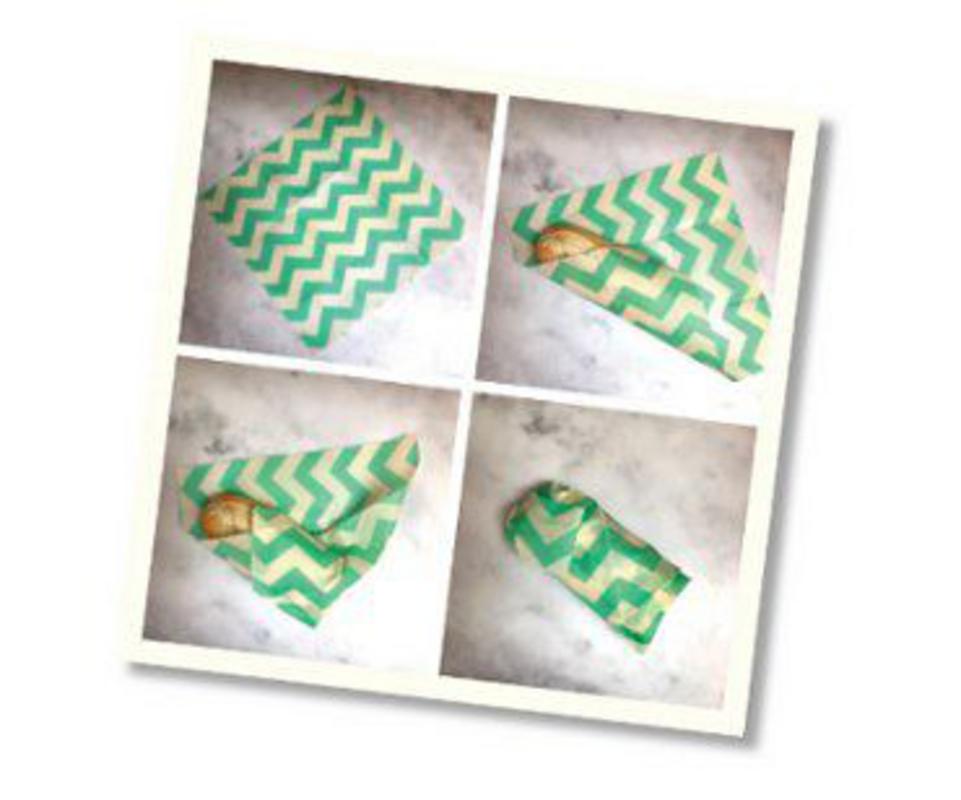
When we go in, we go all in. And so the next step was ditching the cling film and going down the Beeswax wrap route. We got a starter pack so that we could try them out ad get to grips with how they works https://www.realfoods.co.uk/product/36103/small-kitchen-beeswax-wraps but they are so simple that I’ve now invested in plenty more. These foldable, moldable, wrappable wraps really are the bees knees (see what I did there!) and we’re hooked. Our children want to wrap up every sandwich they eat in them - even when they are just taking them through to the lounge for a lap-supper. They come in a range of pretty designs which helps. Plus they allow food to breathe while keeping it completely fresh. Every once in a while they just need a bit of a wash to keep them looking fresh but that’s about it.
Contents
-
'Dear Plastic-free Diary'
-
Your guide to living plastic free
-
Guide to Pulses
-
Guide to Grains
-
How to cook guides
-
How to cook Amaranth Seed
-
How to cook Roasted Buckwheat Kasha
-
How to cook Chickpeas
-
How to cook Red Lentils
-
Plastic-free snacks
February 2026 Sian
Why you should go plastic free, how to make a start and how we can help you on your journey
So, what’s the big deal?
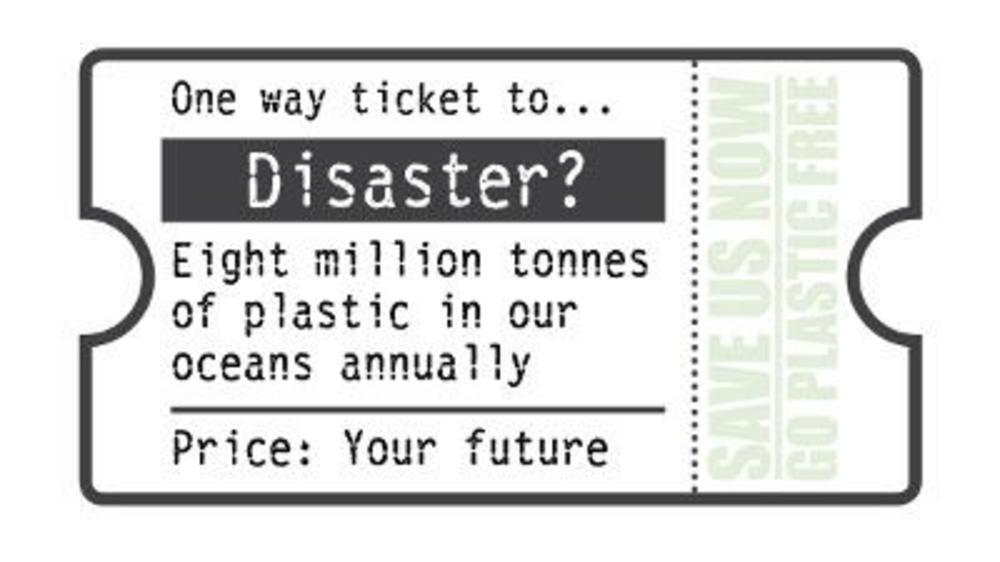
Plastic is a big problem. More than eight million tonnes of it goes into the oceans every year. That’s around 600,000 double-decker buses. Or 250,000 Empire State Buildings being dumped in the sea year on year. Experts predict that by 2050, the amount of plastic in the ocean will weigh more than the amount of fish. Just think about that; there will be as much plastic floating around as there are fish. That’s an appalling realisation by anyone’s standards. Most importantly, it’s a real wake up call on exactly what single-use plastic is doing to the planet.

Things are already in a bad way as one-in-three sea turtles, and around 90 percent of seabirds, have ingested plastic. As a result, their stomachs become full, meaning they don't have room for food and each year 100,000 animals in the sea die as a result. Television coverage such as the recent Blue Planet II episode has helped to highlight the plight of ocean-based wildlife and marked a turning point in public opinion and led to a desire to change. Only we can make a difference and we must do it sooner rather than later. Basically, it’s time to step-up.
Are all plastics bad?
This is a tricky one. Plastic serves a purpose in some areas and it’s not going away any time soon. Just as a starting point it has its uses in industry, medicine and in many long-term use household items. We can’t eliminate plastic and in many cases, it would be simply impossible. So it’s best to concentrate on what’s doing the most damage and what we can change.
There is a move towards bioplastics - that’s plastics made from renewable sources such as agricultural by-products, vegetable oils and even old, recycled plastics. However, they are expensive and currently make up less than 1 per cent of the world’s plastic market. Once the demand is there, i.e. the general public refuse to use single-use plastics and then these will become more mainstream.
In simple terms, it’s single-use petroleum-based plastic that’s by far the worst of the bunch and it’s the one thing that we can start to eliminate through people-power. They are the biggest problem mainly because of the sheer volume of these types of products. Straws, take away cups, carrier bags, food packaging and water bottles, for example, are all used once and then either thrown away or recycled.
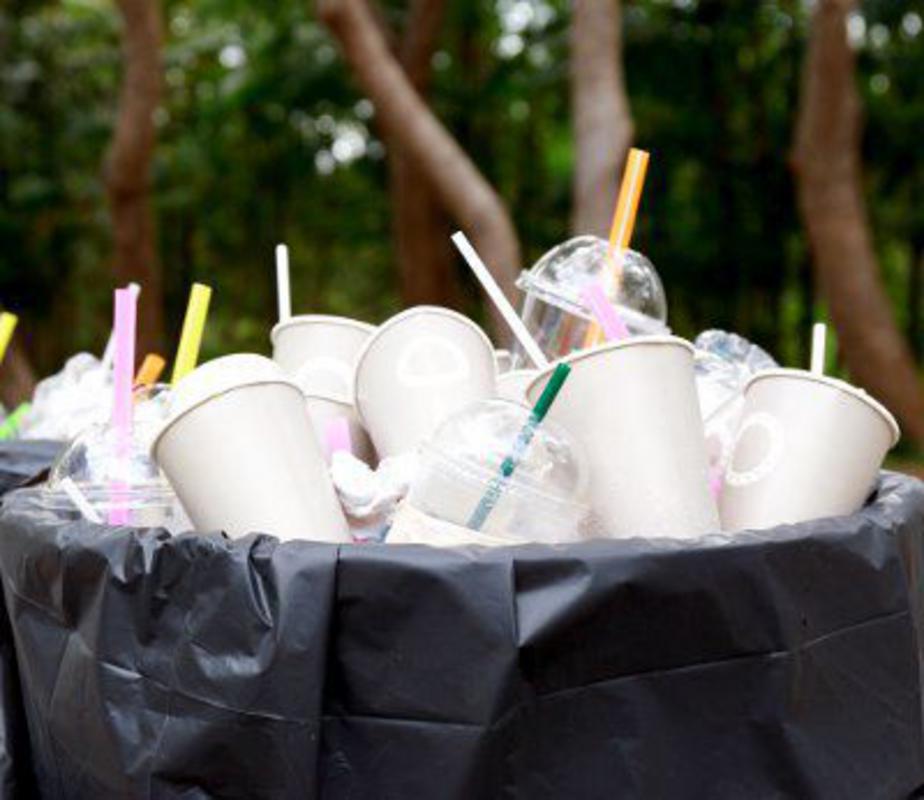
While many plastics might have a place and justifiable uses, single-use disposable items do not. Each year, 400 million tonnes of plastic is produced and 40 per cent of that is single-use - plastic we'll only use once before it's binned. And it’s really quite staggering how long plastics take to biodegrade. A plastic bottle can take up to 450 years, some larger bottles and bags can even take 1000 years! So the plastic takeaway cup that your most recent Flat White came in will still be around long after you’re gone. It’s clear to see that something needs to be done. Large-scale change will inevitably come and some governments are moving in the right direction, but it’ll be a slow process and so it’s important that we all take small, everyday actions right now so we can start to see change.
Okay, I’m convinced. How do I make changes?
Here’s our handy guide to what you can do, whether you’re starting out on your plastic-free journey and need some first steps or your crusade is in full swing and you want to step it up a notch.
There’s a large number of everyday plastic-free wins that you can do at home that take minimal effort. Number one rule: it’s time to add an extra R to your reduce, reuse and recycle mantra - and that’s refuse. Refuse plastic straws, refuse plastic throw-away cutlery, refuse takeaway coffee cups and refuse plastics bags. Making a stand is step one and it’s easy to do.
The most obvious is to ditch the plastic bags and invest in a stash of large cotton totes for to carry your shopping in. Plus, they always look chicer too so that’s a double win in our book. Invest in a reusable coffee cup and say no to the takeaway cup. The plastic film inside a takeaway coffee cup is single use and cannot be reused. Get yourself a reusable one such as a Keep Cup and take it with you for coffee shops to fill up rather than use a one-use plastic one. Reusable coffee cups come in all kind of beautiful designs now so again, you’ll look good while you help save the planet. If that weren’t enough, many coffee shops also offer a discount on your takeaway coffee if it’s being served in a reusable cup. Again, win-win!
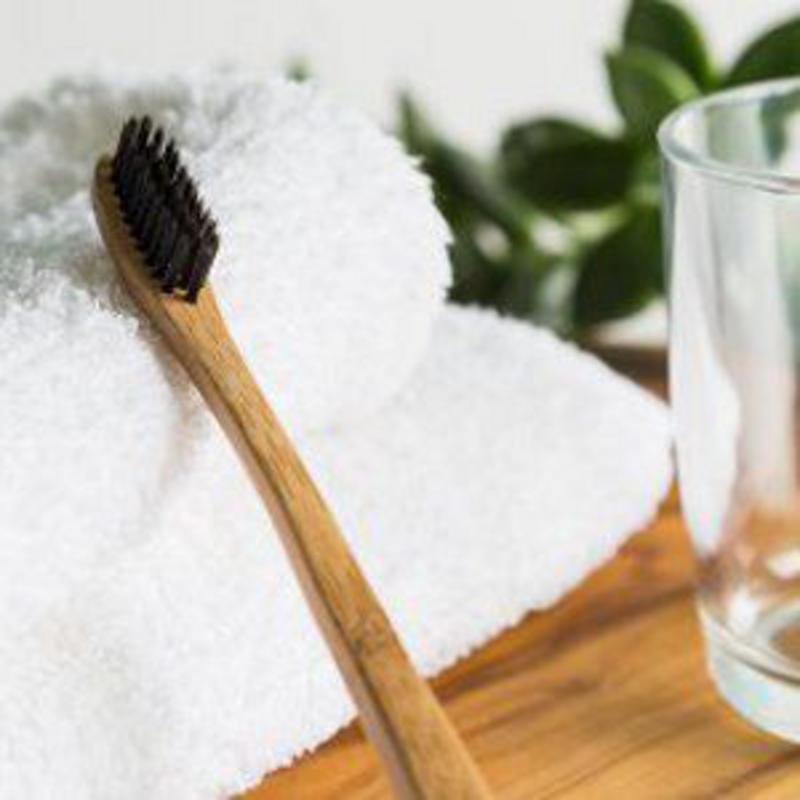
The same goes for water bottles - grab yourself a metal, reusable water carrier and put an end to those endless plastic bottles. Next step, ditch your plastic toothbrush and go for bamboo.
Virtuous coffee lovers may have made their move towards reusable cups but the next culprit is coffee pods so they’ve got to go too. Opt for a cafetiere coffee instead, or if you really can’t go without then swap your single-use coffee capsules for recyclable ones.
Taking the next steps
Take these three steps and you’ll be a fully-fledged, no-to-plastic maverick. Of course, now you’ve made a start, you’ll have the bug and will want to do more. We don’t blame you. Step up your game by opting to only buy loose fruit and vegetables. They’re the easiest place to start and really, what fruit or veg was ever improved by wrapping it in plastic? Find a shop like Real Foods in Edinburgh where there are 150 fruit and vegetables for self-service at high season and you can simply take them away in your trendy tote bag without a piece of plastic in sight.
Don’t stop at apples and bananas though, shops such as Real Foods also sell loose loaves of bread, all made locally of course, which you take away in brown paper bags.
There are also plastic free shops popping up in many towns where you can take your own container and buy many different dry goods. Real Foods have been selling coffee beans and other scooping goods served into whatever container you choose for almost all of the 40 years or so they have been open on Broughton Street in Edinburgh.
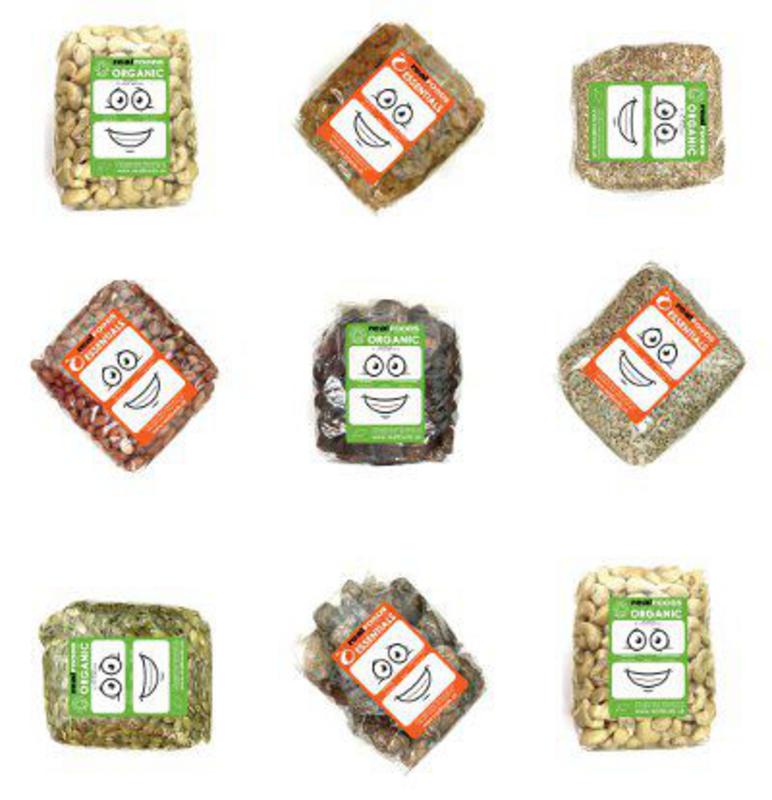
Can’t get to Edinburgh? Don’t worry; Real Foods pack their dry goods in cellulose bags which are plant-based and can be safely added to your home compost – see our packaging information here. You can buy many wonderful foods in sizes from 25g all the way to 1kg from our plastic free shop. The beauty of this is that the more you buy the less you will pay per gram!
Becoming a plastic-free warrior
The environmental issues surrounding plastics are the main reason that many people are starting to move away from plastics, but there are health concerns too. Once you’re ready to banish plastic for either reason, there are a number of long-term goals that you can work towards.
Making your own - be it growing your own fruit and vegetables, keeping chickens or simply baking all your bread and cakes at home, all of these mean zero plastic. Making your own non-dairy milk is another great step and easy enough when it comes to almond milk. For those items, you need to buy from the shops, make friends with your local independent shopkeeper and ask them to put your shopping in your own reusable containers.
Make a commitment to yourself to stop buying anything in plastic packaging. Once you start it becomes clear that there’s always another option.
Let Real Plastic Free help
Real Plastic Free is committed to becoming a leader in this field. Building on the work that Real Foods has been doing for many years, our commitment is to reducing single-use plastic ranges. Online ordering is a plastic-free option as we use cardboard boxes and cellulose or paper packaging for wrapping. Cellulose is primarily made from wood pulp and is truly biodegradable, so you can pop all your Real Plastic Free packaging in the recycling.
If you want to take on the challenge and need a kick-start then try The Marine Conservation Society. They set a challenge to go single-use plastic free every June. It’s another great way to start your journey towards cutting right down, but don’t let it stop you from starting right now. Once you’re on the way to cutting out single-use plastics, then you can get your family and friends on the right track too.
Contents
-
'Dear Plastic free Diary'
-
Your guide to living plastic free
-
Guide to Pulses
-
Guide to Grains
-
How to cook guides
-
How to cook Amaranth Seed
-
How to cook Roasted Buckwheat Kasha
-
How to cook Chickpeas
-
How to cook Red Lentils
-
Plastic free snacks
October 2025 Ruth
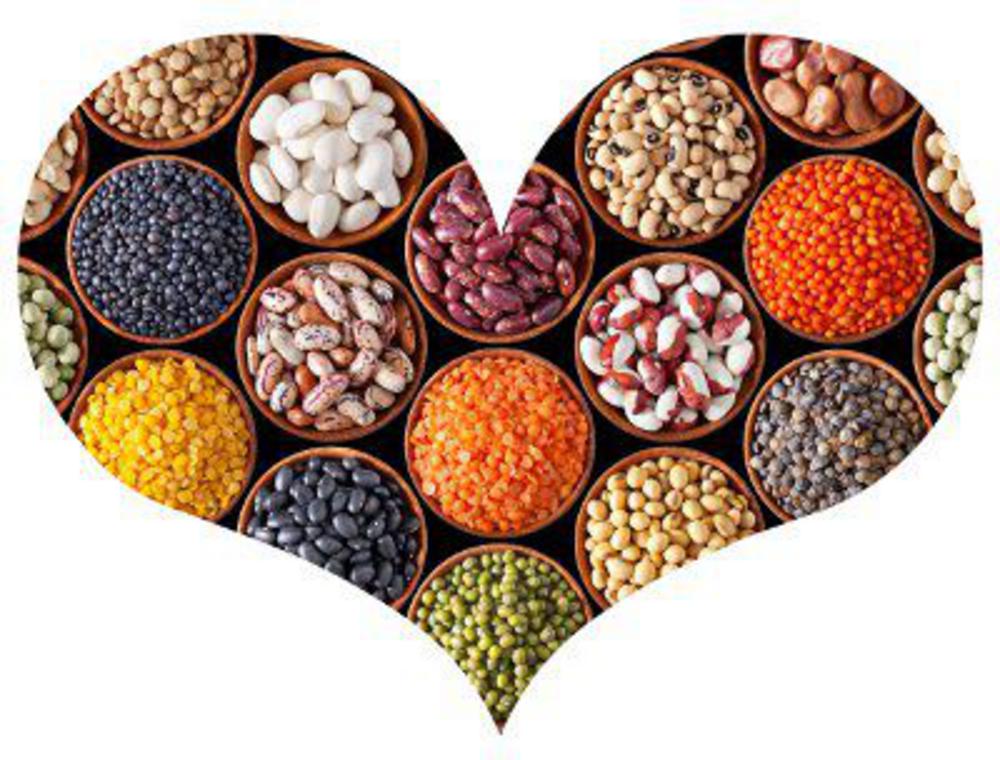
Pulses are a boon to people who don’t eat meat, fish or dairy, (and those who do) simply because they are an excellent source of protein. They’re also great for bulking up meals; throw a handful into soups, casseroles and stews to stretch the meal further with the added benefit of providing extra nutrients as well. They provide a cheap, low fat and extremely tasty addition to any family menu! Pulses will also add excellent sources of iron, starch and fibre in your diet.
Here’s a guide to our range of pulses and great options for including them in your weekly meal plans.
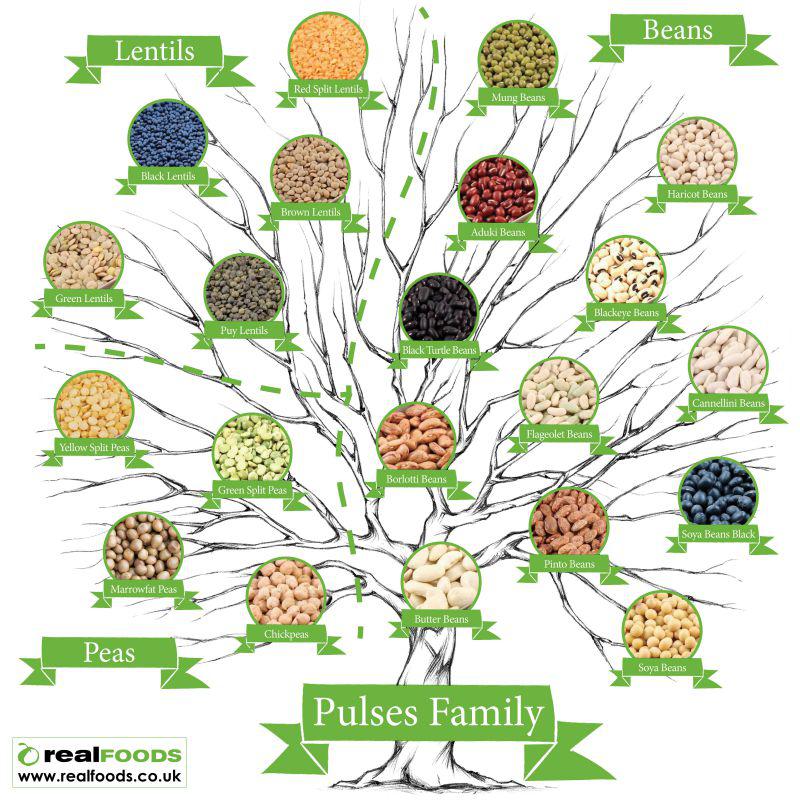
What are pulses? are they different to beans and peas?
Pulses are peas, beans and lentils that have been harvested, dried and sold as food. A portion is around 80 grams (roughly 3 tablespoons) and counts as one of your ‘five a day’, only one, however (even if you eat more than 80g), so you still need to eat plenty of fresh fruit and vegetables as well to stay healthy.
Beans, peas and pulses belong to the legume family, known as Fabaceae or Leguminosae. This is a family of flowering plants with often edible seeds.
Their names can be misleading though. Chickpeas aren't a pea, they're a bean. Whilst Broad Beans? You've guessed it they're really a pea! Liquorice, alfalfa, peanuts and carob are also all members of the legume family.
The dried seed of these plants (or indeed the plants themselves) are often referred to as ‘pulses’.
Why are pulses good for you?
Pulses are a boon to people who don’t eat meat, fish or dairy, (and those who do) simply because they are an excellent source of protein. They’re also great for bulking up meals; throw a handful into soups, casseroles and stews to stretch the meal further with the added benefit of providing extra nutrients as well. They provide a cheap, low fat and extremely tasty addition to any family menu!
Pulses are also good sources of iron, starch, complex carbohydrates and fibre to add to your diet. They are cheap, low fat and extremely tasty! Their soluble fibre content can help you feel full for longer which may reduce your desire to snack, helpful if you are watching your weight.
Beans and peas can help to reduce cholesterol (reducing your chances of heart attacks and strokes), manage diabetes and lose weight. Pulses are useful for reducing blood sugar spikes due to their soluble fibre content and also for helping to lower blood pressure. They are also a great source of folate (an incredibly useful B vitamin). People who have to avoid gluten or wheat can happily eat all pulses.
Do you always have to soak dried pulses before cooking?
No, but soaking reduces cooking time. Lentils, Aduki, Blackeye and Moong Beans can be cooked from scratch without soaking, however, they may still benefit from soaking (it stops the shell from cracking and removes any impurities).
Take more care if cooking Soya and Kidney Beans, as if they are improperly treated they will release a toxin. Soaking and cooking properly will easily prevent this, but be aware they do need to treated correctly or used from tins (where they are pre-cooked).
Cooking times vary depending on the freshness of the bean, the size and the heat. Checking regularly during cooking is the only way you'll find out what works for you. If you cook them too long they'll form a paste (handy if you're trying to make a dip, but less so if you want the actual texture of the bean!)
Are there any benefits to using dried beans over pre-cooked in a can?
Sometimes the tinned or canned beans can contain added salt or brine which dried ones won't – check the ingredients on the tin to find out. You'll get more of the nutrition if you make the effort to use dried pulses, but using the tinned ones is better than missing out on them altogether.
Using dried beans will save you a lot of money. Like-for-like dried and canned beans are roughly similar in price, however being as most beans will swell up to around 2.5 times their original size, that's how much you'll be saving. E.g. A tin of chickpeas is around 350 - 400g and anything from 70 pence to £1.50. To get that from dried you'll need around 100 - 150g of chickpeas, anything from 50 to 70 pence. Choose our Real Plastic Free packdowns and the more you buy, the bigger the discount.
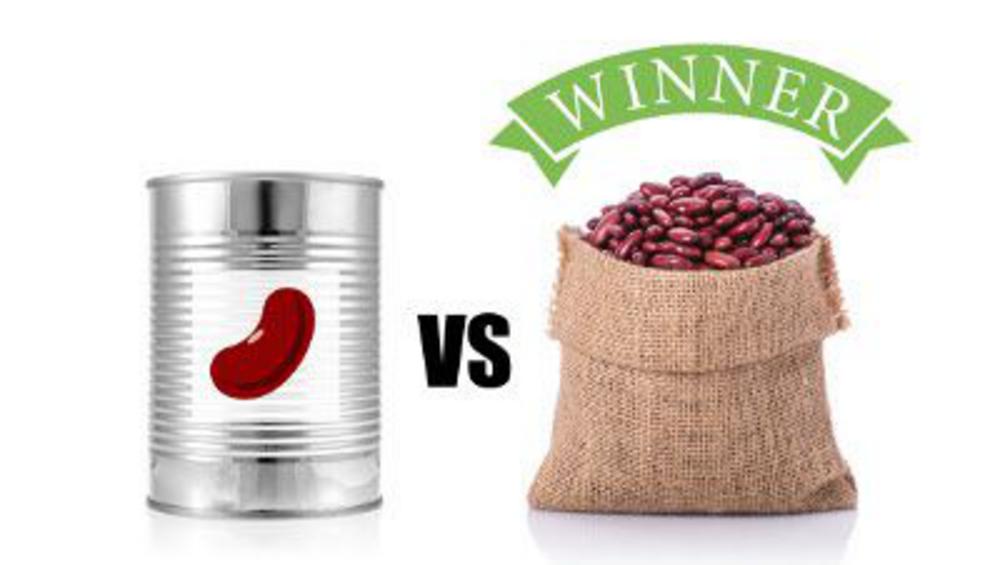
If you're using quite a few tins of beans it is well worth looking at buying dried beans, especially since they are packed in compostable cellulose bags rather than tins you have to add to your household rubbish. Having said that, storing a couple of tins in the cupboard is always a useful addition to extend meals or throw a quick dip together.
Tips on preparing pulses and beans
-
Sort and rinse the beans. This means spreading them out and checking any debris has been removed then rising in a sieve or colander under cold running water.
-
Soak the beans. Beans will cook in less time and more evenly if they are soaked first. Not all beans must be soaked. Lentils, Aduki, Black Eye, and Mung beans can all be cooked from scratch. This doesn’t mean they won’t benefit from soaking, or that you can’t soak them. Just that they don’t need to be.
-
Most beans will need a minimum of 4 to 12 hours of soaking in fresh, cool water. Discard the soaking water. Or try a ‘quick-soak’ method.
-
Quick-soak - Simply cover with a few inches of water and boil for 2 minutes, remove from the heat, leave for an hour and then drain.
-
Drain and rinse well. Add to a pan with fresh water - you'll need 3-4 cups of water for each cup of beans or pulses. Each cup of dried beans should yield around 2-3 cups of cooked beans.
-
Cover the pan, bring to the boil and simmer with the lid still loosely covering (it stops the water evaporating too much.) Basically, the length of time it takes depends on how fresh the beans are, their size and the pan and heat you're using. The best idea is to test them often. You'll soon see what works.
-
Skim if necessary.
-
Consider using a pressure cooker if you have one. They dramatically reduce cooking times. Use high pressure for all dried pulses.
-
Add seasonings such as bay leaves, onion, garlic or bouillon as you start cooking, but leave the acidic ingredients such as tomatoes, vinegar or lemon juice until near the end as they can impair the tenderness.
Real Foods pulses and their cooking times
You can buy all of these beans and peas, packed in plastic free cellulose, from us in sizes up to 1kg. The larger the pack you buy, the cheaper the price per gram becomes.
Aduki Bean
Soak: No soaking required
Cook: 45 – 60 minutes if simmering from soaked. Up to 2 hours if unsoaked.
Pressure cooker: 14-20 Mins
Pre-soaked & pressure cooker: 5-9 Mins
Borlotti Bean
Soak: Yes (minimum of 4 hours)
Cook: 1 ½ hours
Pressure cooker: 20-25 Mins
Pre-soaked & pressure cooker: 20-25 mins
Black Turtle Bean
Soak: Yes (minimum of 4 hours soaking)
Cook: Simmer for 35-45 Mins
Pressure cooker: 10-12 mins
Soak: No
Cook: 1 ½ hours
Pressure cooker: 6-7 Mins
Pre-soaked & pressure cooker: 3-5 mins
Soak: No
Cook: 1 ½ hours
Pressure cooker: 6-7 Mins
Pre-soaked & pressure cooker: 3-5 mins
Soak: Yes (minimum of 8 hours or overnight)
Cook: 1-1 ½ hours
Pressure cooker: 12-15 Mins
Pre-soaked & pressure cooker: 5-7 Mins
Soak: Yes (minimum of 4 hours soaking)
***Boil for a minimum of 10 minutes to remove toxins***
Cook: Simmer for 1-2 hours depending on their size.
Pressure cooker: 25-30 Mins
Pre-soaked & pressure cooker: 6-8 mins
Soak: Yes (minimum 8 hours or overnight)
Cook: 1-2 hours simmering
Pressure cooker: 35-40 Mins
Pre-soaked & pressure cooker: 13-15 Mins
Cook: 1 1/2-2 hours simmering
Pressure cooker: 18-20 Mins
Pre-soaked & pressure cooker: 6-8 Mins
Cook: 1 1/2 - 2 hours
Pressure cooker: 18-20 Mins
Pre-soaked & pressure cooker: 6-8 Mins
***Must boil for a minimum of 10 minutes to destroy the toxin***
Cook: Simmer for 45-60 mins. May need an extra half hour if large and tough
Pressure cooker: 22-24 Mins
Pre-soaked & pressure cooker: 5-8 mins
Soak: No
Cook: Simmer for 35-45 Mins
Pressure cooker: 10-12 mins
Soak: No
Cook: Simmer for 35-45 Mins
Pressure cooker: 10-12 mins
Soak: No
Cook: Simmer for 20 -25 mins.
Pressure cooker: 8-10 Mins
Soak: No
Cook: Simmer for 15-20 mins.
Pressure cooker: 4-6 min
Soak: No
Cook: 1 hour - 1 1/2 hours
Pressure cooker: 6-8mins
Soak: Yes - ideally 12 - 16 hours (sometimes with a bicarb tablet to help soften them and retain the colour)
Cook: Simmer for 20-30 minutes
Pressure cooker: 16-18 Mins
Pre-soaked & pressure cooker: 8-10 mins
Soak: No (If you want to you can soak for around 6 hours and it will reduce cooking time by half an hour roughly.)
Cook: Simmer for up to an hour. If soaked 45 mins ought to do it
Pressure cooker: 1 minute
Soak: No (if you do want to soak them don't use baking soda to soak split peas it will turn them into a watery purée!)
Cook: Simmer for up to an hour. If soaked, 45 minutes ought to do it.
Pressure cooker: 1 minute
Soak: Yes
Cook: 1 1/2 -2 hours
Pressure cooker: 22-24 Mins
Pre-soaked & pressure cooker: 4-6mins
Soak: Yes (minimum of 12 hours recommended by NHS - 7-9 hours recommended for best results making soya milk* abstract of
paper here from ResearchGate)
Cook: 3-4 hours
***Must boil for an hour then simmer for the next 2-3 hours to destroy all toxins and ensure they are fully cooked***
Pressure cooker: 35-40 Mins
Pre-soaked & pressure cooker: 20-22 mins
Contents
-
'Dear Plastic free Diary'
-
Your guide to living plastic free
-
Guide to Pulses
-
Guide to Grains
-
How to cook guides
-
How to cook Amaranth Seed
-
How to cook Roasted Buckwheat Kasha
-
How to cook Chickpeas
-
How to cook Red Lentils
-
Plastic free snacks
Grains are an excellent source of energy, a good source of fibre and provide the starch that should make up at least a third of our diets. Most people do not eat enough starch. Wholegrains, as near to their original form as possible, slow down the digestion of starches and help to prevent spikes in blood sugar levels.
Why are grains good for you?
Starchy foods ought to make up at least a third of your diet. Most people don’t eat enough, despite them being a good source of energy and of fibre, calcium, iron and the all-important B vitamins.
Wholegrains, as close to their original form as possible, slow and reduce the digestion of starch and this helps prevent spikes in blood sugar.
Wholegrain consumption can help reduce hypertension and obesity. Wholegrains also can provide a significant decrease in risk factors for cardiovascular health and type II diabetes.
What is even better is that they’re also very tasty! Move beyond bland white rice to some of the many other great options that there are in the way of wholegrains. You could try perking up your soups or stews by adding some rye grain, or you could replace your rice with spiced quinoa or bulghar.
Did you know it is not just corn that pops? Why not try out all the different popping grains and find your favourite?
We have a wide range of grains available to buy, packed in Real Foods environmentally-friendly cellulose bags. Real Foods have been using these bags for years and they have stood the test of time. So you can buy them with confidence, knowing that not only are you buying top quality, highly nutritious food, but you are also helping the environment, by ordering in cellulose bags that can be composted at home rather than added to landfill.
Available in sizes up to 1kg, you will find that you can get the best price by buying larger sizes.
Read on to learn more about the different grains you can buy online at realplasticfree.com
Amaranth
Part of the Aztec diet for more than 8000 years, Aztecs would collect Amaranth seeds in the wild. As well as eating the seeds, they used them to make flour for baked images of their gods during festivals and for tributary payments. These seeds are packed with protein, vitamins and minerals and have been a staple part of the diet of many cultures. It is a versatile food that can be used in many recipes and is recommended by the World Health Organization and used in the NASA space program.
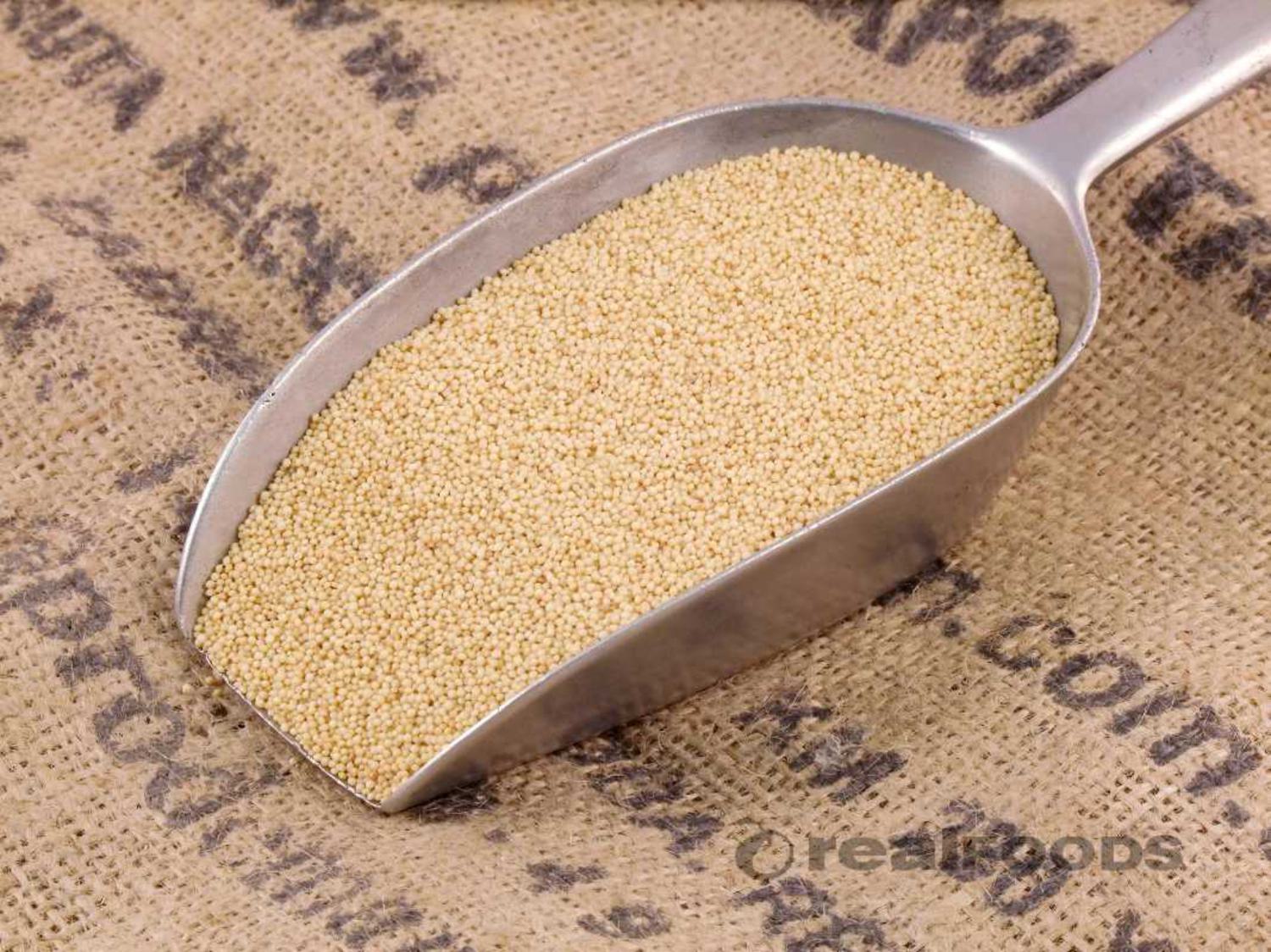
Amaranth’s high amount of dietary fibre and potassium makes it an important food for heart health. It helps to balance cholesterol levels, lowering the risk of atherosclerosis and relaxes the blood vessels, reducing the risk of stroke or heart failure.
Adding amaranth to the diet helps to promote ocular health because it is rich in vitamin A. It contains beta-carotene, which is an antioxidant that inhibits the development of cataracts.
It can be made as salads, side dishes or main course meals. Amaranth is not only delicious, but it also helps keep the body healthy.
Amaranth is a gluten free seed that has a host more nutritional benefits. It has more protein than any other gluten free grain (oats are a close second for protein content). It's an excellent source of lysine, calcium, magnesium and vitamin E. Amaranth is incredibly useful in baking, improving the texture of gluten free bread and is an excellent thickener for sauces, soups and stews.
Amaranth absorbs water very easily, so if used solely in baking it will create dense, heavy goods that won't rise properly, however using it for up to 25% of the total flour used it will help create delicious baked goods.
Barley
Barley is another grain containing all the eight essential amino acids and it has been cultivated for 1000s of years. In ancient Egypt, barley was pictured on early currency and gladiators in ancient Rome ate barley for endurance and strength.
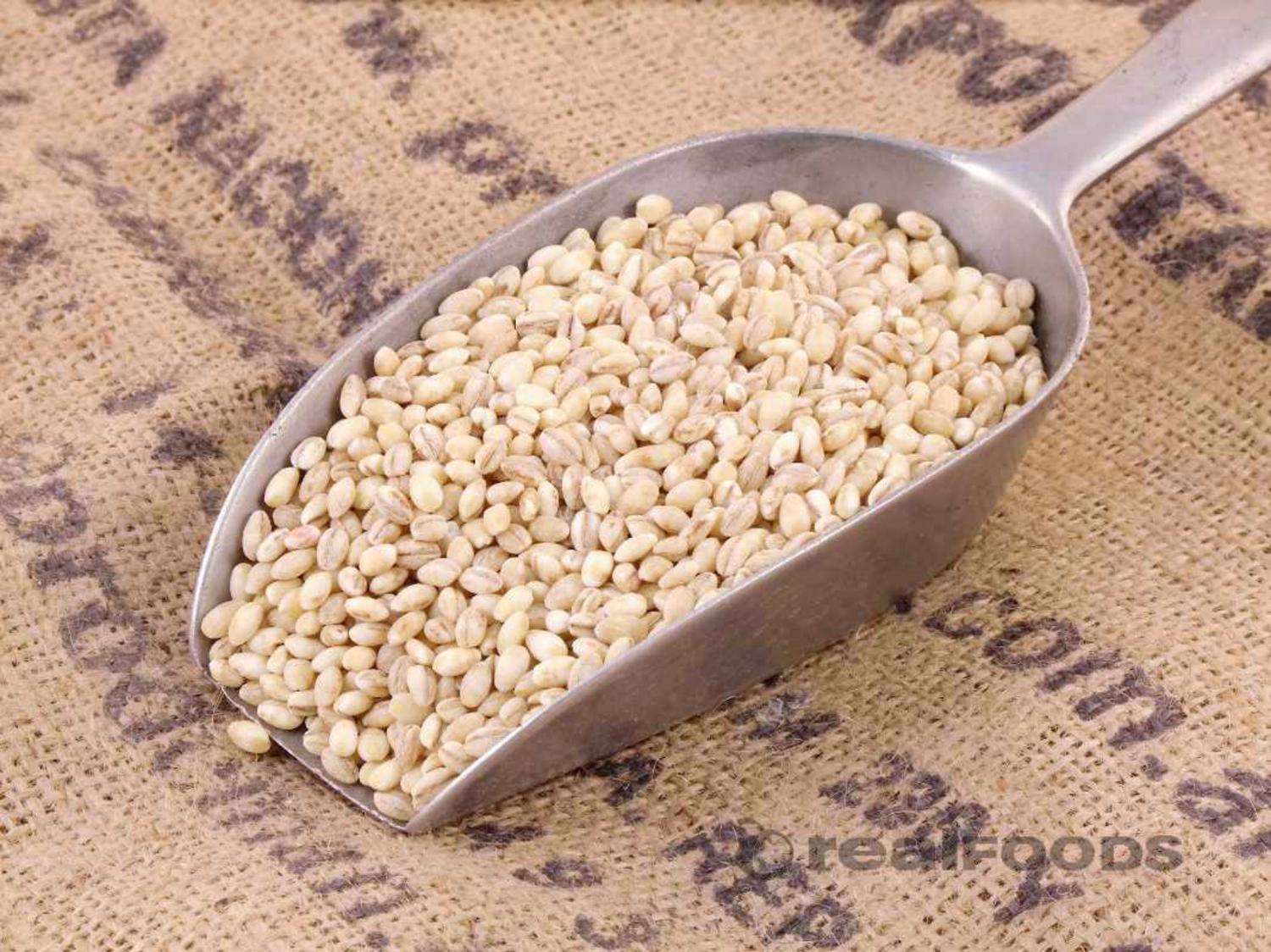
Although barley may not be as popular as other whole grains like oats or wheat, it does have some impressive health benefits. Barley provides a range of important vitamins and mineral, it is also a high fibre grain. Compared with many other grains it is higher in fibre and lower in fat and calories. It’s good for regulating blood sugar.
It's actually a grass and is used widely in malting and beer making.
Barley needs to have its hull removed (it's inedible), once removed it's referred to as Pot Barley (or Scotch Barley, but in Scotland, we usually call it Pot Barley!) It's one of Scotland's main cereal crops, far outstripping the amount of wheat and oats grown here. It's used in Scotch Whisky. When the outer bran layer is removed it is referred to as pearl barley.
Barley is not gluten free.
Millet
Millet is another prehistoric grain and is native to western Asia. When one of the many varieties of millet arrived in Europe, it got its name, which meant “cereal” in Old English. It was used as cereal for humans and livestock feed. Millet continues to be a staple food in many countries. Millet is a highly nutritional grain that worked its way into the recipe as a valuable addition to the diet.
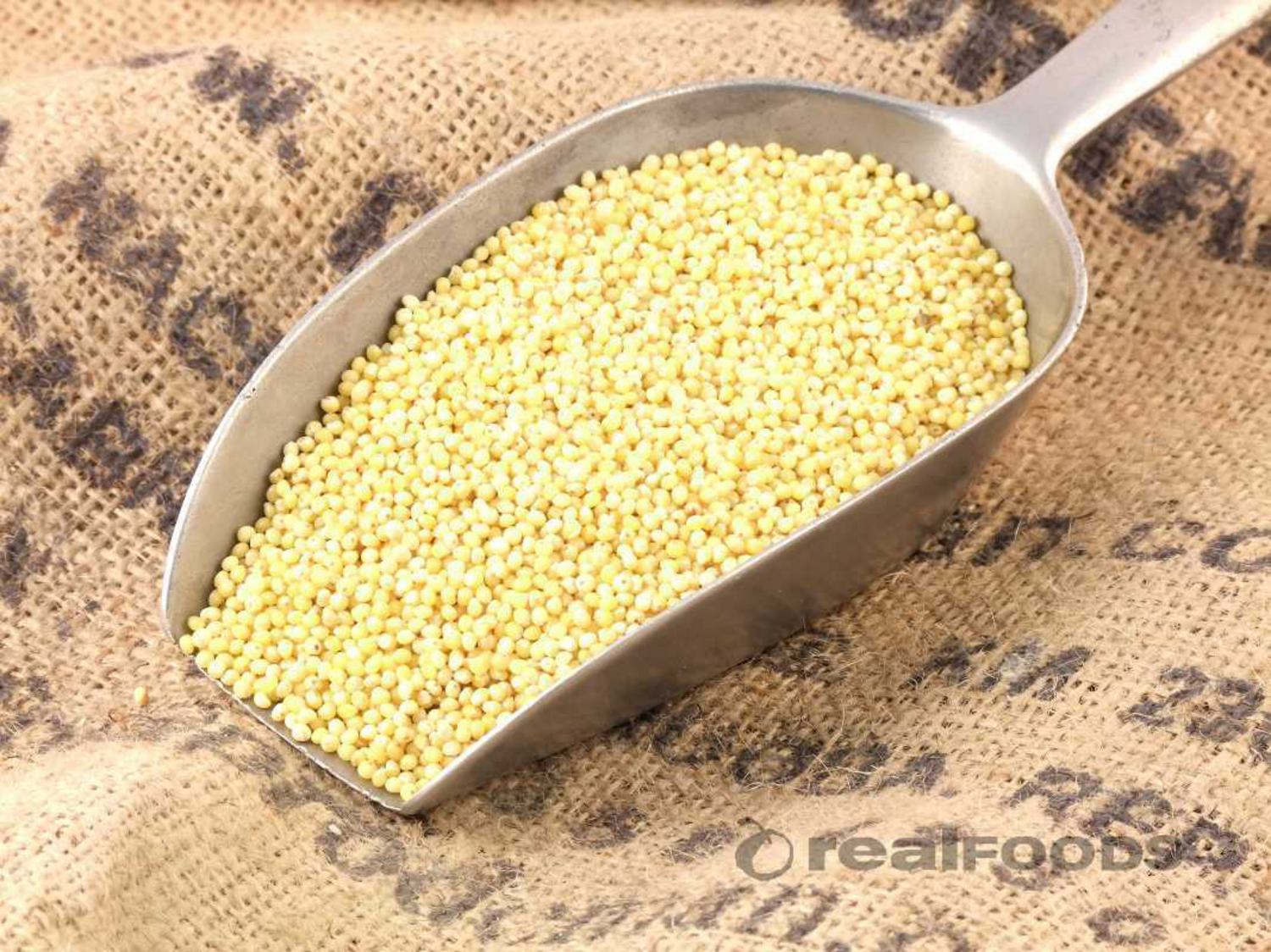
The copper and iron content in millet aids in the production of red blood cells; so it reduces the presence of anaemia. While the presence of phosphorus helps in the control of blood pressure. The high magnesium content of millet can help to reduce the risk of Type ll diabetes and the high calcium and Vitamin D content can work to support good bone health.
Millet is rich in antioxidants including tryptophan – important in the production of the ‘feel good’ hormone serotonin. It will also provide a good source of B vitamins.
Millet is a mild tasting grass, it's a great alternative to rice in pilafs, soups and salads. Try the flakes in porridge for a non-glutinous, nutritious alternative.
Oats
“A grain, which in England is generally given to horses, but in Scotland appears to support the people.” Samuel Johnson.
An oft-quoted remark from a 1755 dictionary which invariably gets the response “that’s why England has good horses, and Scotland - good people!".
Oats are a rich source of magnesium and contain beta-glucans. These have been linked to a decreased risk of type II diabetes and minimising spikes in blood sugar. Recent experiments show that magnesium deficiency may be linked to depression. Here's our complete guide to all of the different oats available and some suggestions on how to use them. Oats are highly nutritious, survive in hardy conditions (that’s why many of ours are locally grown) and can be used in a huge array of recipes.
Whole Oats
Whole oats have a hard outer shell that must be removed before being used for human consumption. Removing this hard outer hull is not simple and you need specialist equipment plus a very helpful miller. If you want to eat whole oats, you need to purchase hulled oats, known as ‘oat groats’.
Oat Groats
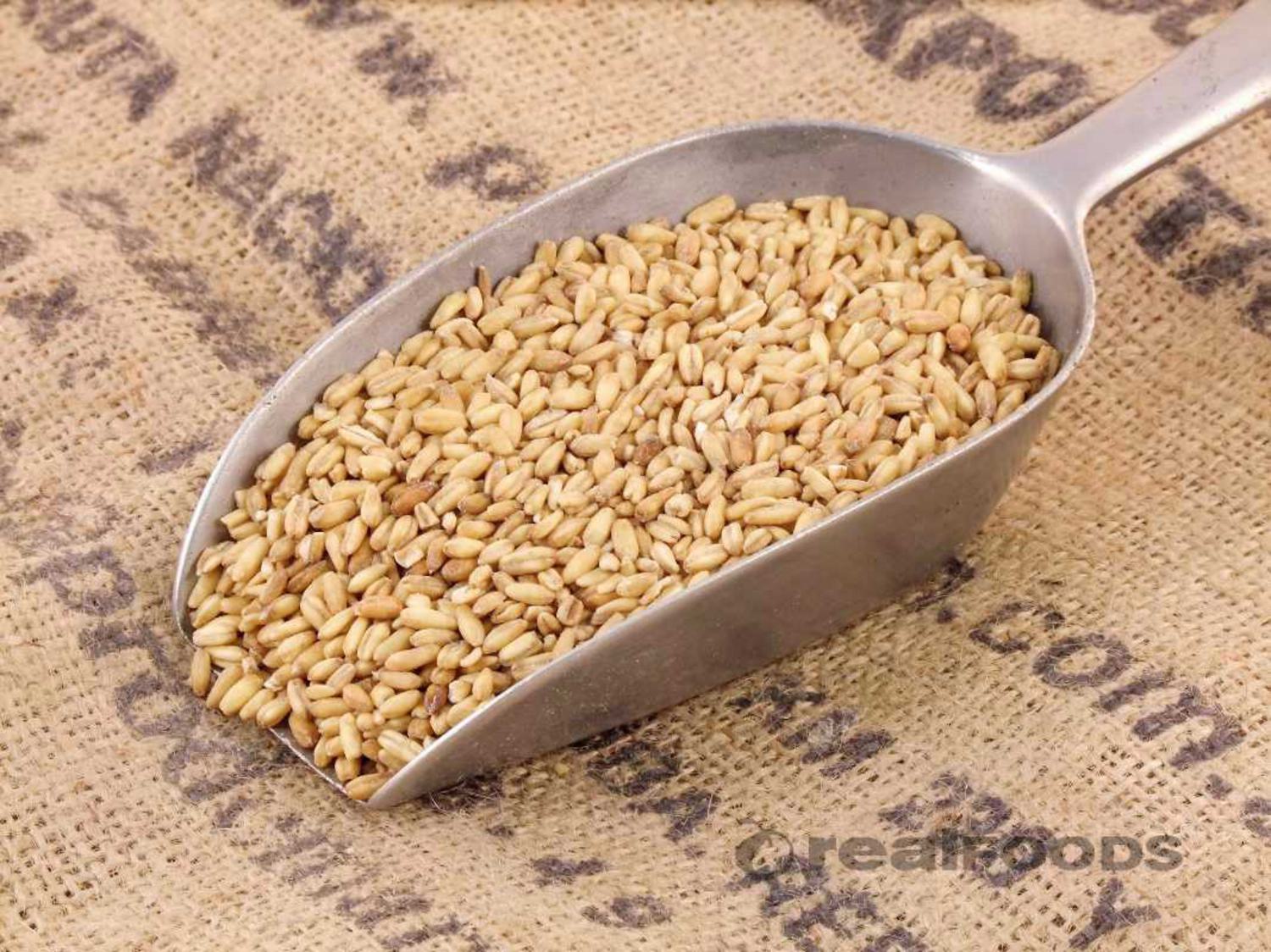
Oat Groats are the whole oat grain, with only the hard unpalatable outer hull removed, but with the kernel’s outer bran layer remaining intact. They look like brown rice, long and thin with a smooth shiny surface. They can be eaten at this stage, but are often processed into other forms of oats.
You can make porridge with oat groats by soaking them overnight and cooking on a low heat for 20 to 30 minutes. Delicious, but takes more time than most porridge recipes.
Oat groats are not a raw food as they are heat treated to prevent them going rancid too quickly.
Rolled Oats
Rolled oats are made by steaming groats and flattening them with a roller. There are two varieties of rolled oats.
Old-fashioned, or Jumbo Oats are made by first steaming the whole groat for a few minutes, thus partially cooking it, then passing it between rollers to flatten it out. Used extensively in flapjacks, confectionery, bread, cereal bars, muesli, granola and traditional porridge they provide a firm texture.
Porridge Oats, Flaked Oats, Quick Oats or Superfast Oats are usually the same type of product and are quick cooking.
They are a very versatile wholegrain cut oat flake ideally suited to the production of porridge, muesli, flapjacks, cakes, biscuits, cereal bars, bread coatings and cheesecake bases.
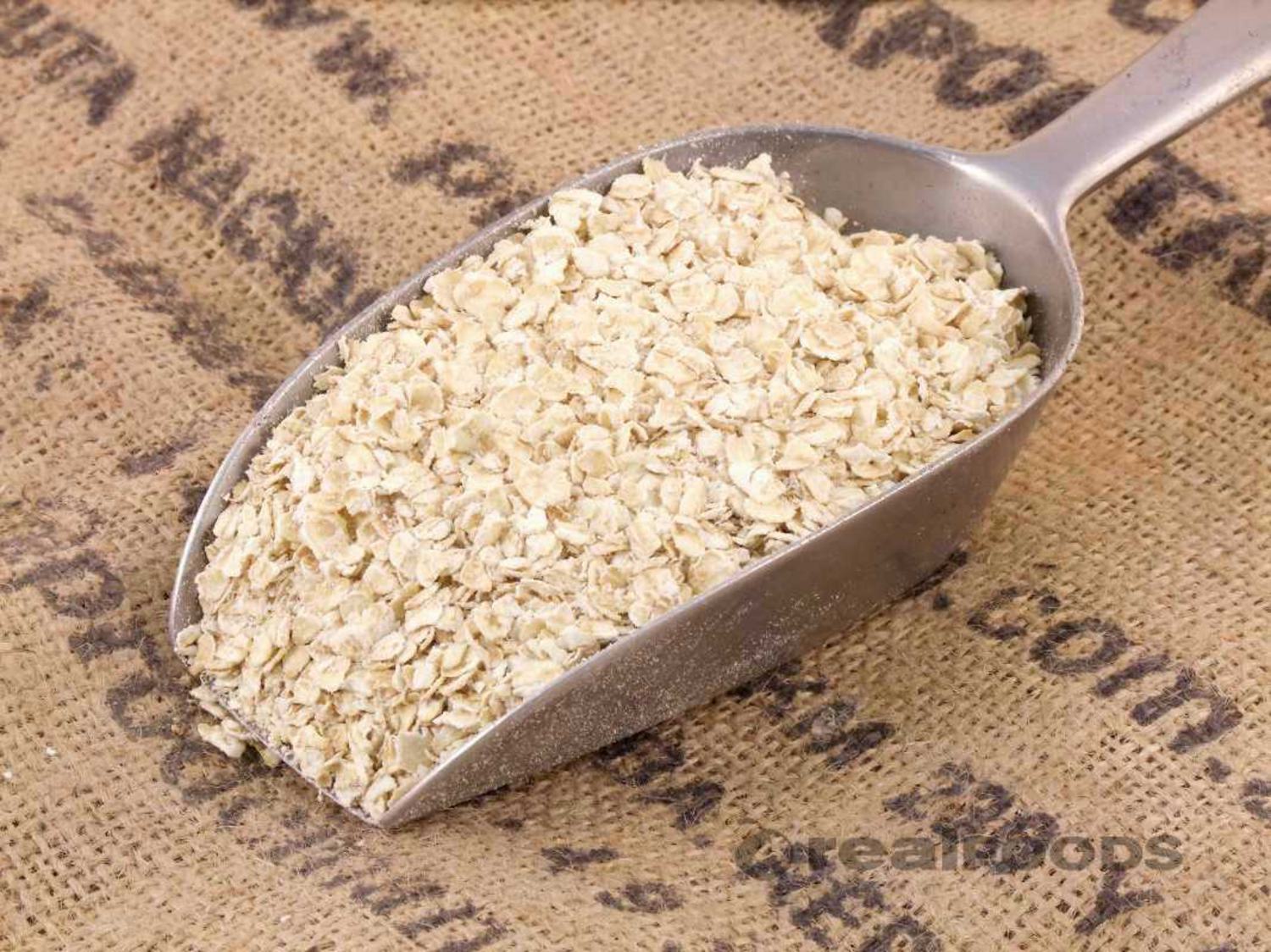
Oat Bran
Oat bran, made from the outer skin (once the husk is removed) is very nutritious. Oat Bran is high in soluble fibre and is used in many products that can claim to reduce cholesterol as part of a healthy diet. It is sold as a topping for home baking or as a healthy eating supplement.
Oat Bran has an exceptionally high fibre content - 50% more than the average bowl of porridge (which is already high in fibre!) This gives you a feeling of fullness. In addition, oat bran blocks the intake of calories from your intestinal tract. This slows down your uptake of glucose and can help keep blood sugar levels low and stable.
Oat Bran can go off quickly, you're advised to keep the bran in a sealed container in a cool dark place; to prolong its life pop it in the freezer.
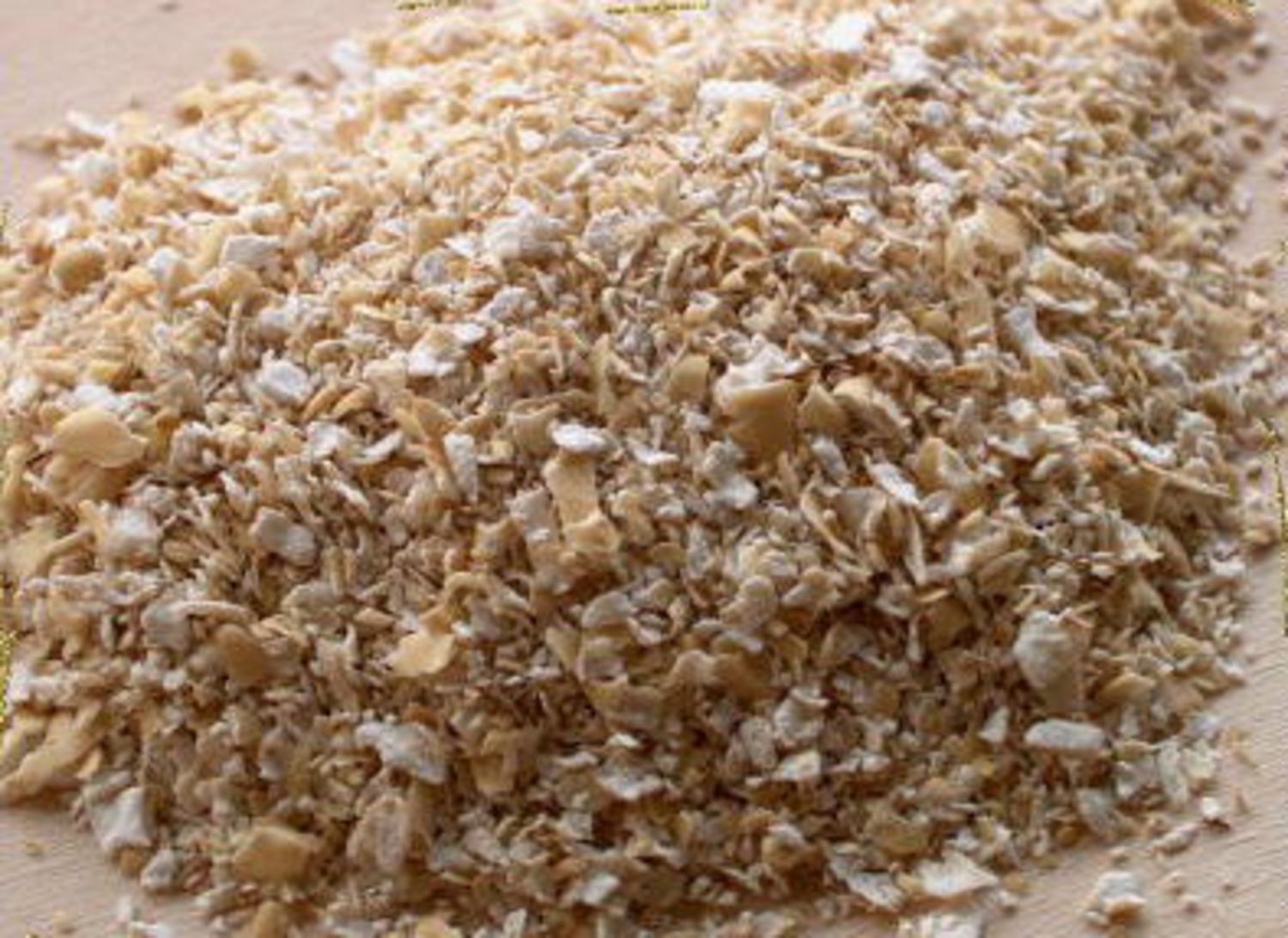
Oatmeal
Pinhead oats or coarse oatmeal is sometimes called Scots, Irish or rough oatmeal made by passing groats through steel cutters which chop each one into three or four pieces, they still contain the whole grain including the oat bran, so are very nutritious. They have not been steamed or rolled so they take longer to cook (think an hour rather than ten minutes). However, they are not raw as oats are heated to ensure they don't go rancid.
Medium oatmeal is made in the same way as pinhead but the pieces are smaller and finer. Popular for making porridge and parkin, it has a smaller granular texture which can be used to coat foods before cooking and is good in stuffing, oatcakes and crumble toppings.
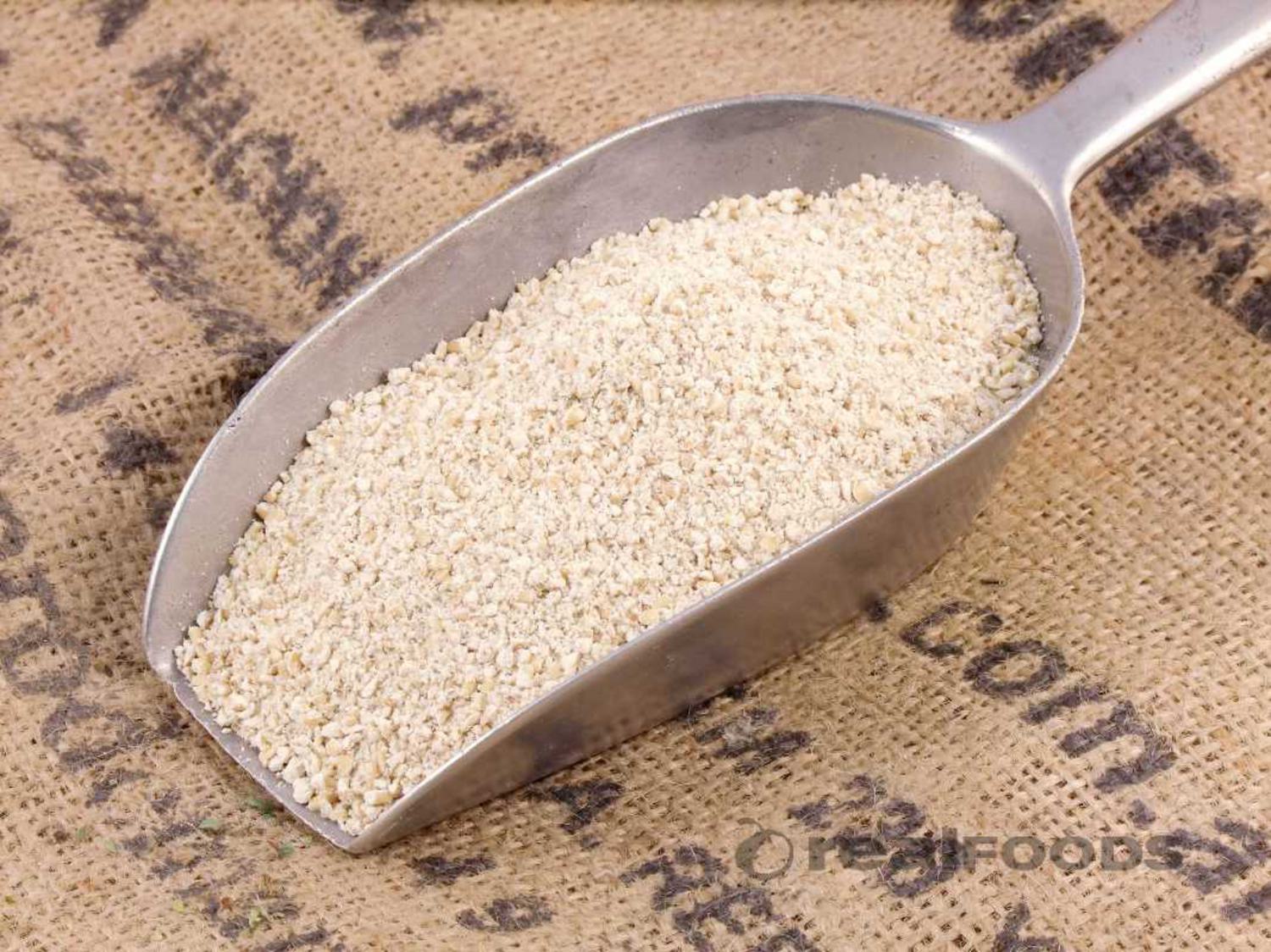
Fine Oatmeal is the finest grade of whole grain oats. Its fine smooth texture make it ideal as a thickening agent, or when mixed with wheat flour will produce biscuits, bread products, cakes and other pastries.
Gluten Free
Oats are naturally Gluten Free but as they are frequently in contact with wheat, rye or barley, whether in growing, milling or processing, they are not suitable for coeliacs or people avoiding all gluten.
Popping Grains
A surprising number of grains can be popped, including amaranth, quinoa, millet, sorghum and the famous one... corn. To pop them yourself, simply heat up a heavy based pan over a medium heat, add a tablespoon at a time and shake the pan back and forth until they've popped. Doing more than that at a time may well result in burnt grains, so a little at a time is best.
Popped grains can be eaten as a breakfast cereal with milk or a milk alternative. You can also try adding different flavourings (a little salt of a little honey perhaps)
Quinoa
Quinoa (pronounced KEEN-wah) is a pseudo-cereal, a seed rather than a grain, but it is prepared and consumed like a grain. Quinoa seeds are flat, oval-shaped and usually pale yellow, although you can also buy red or black quinoa.
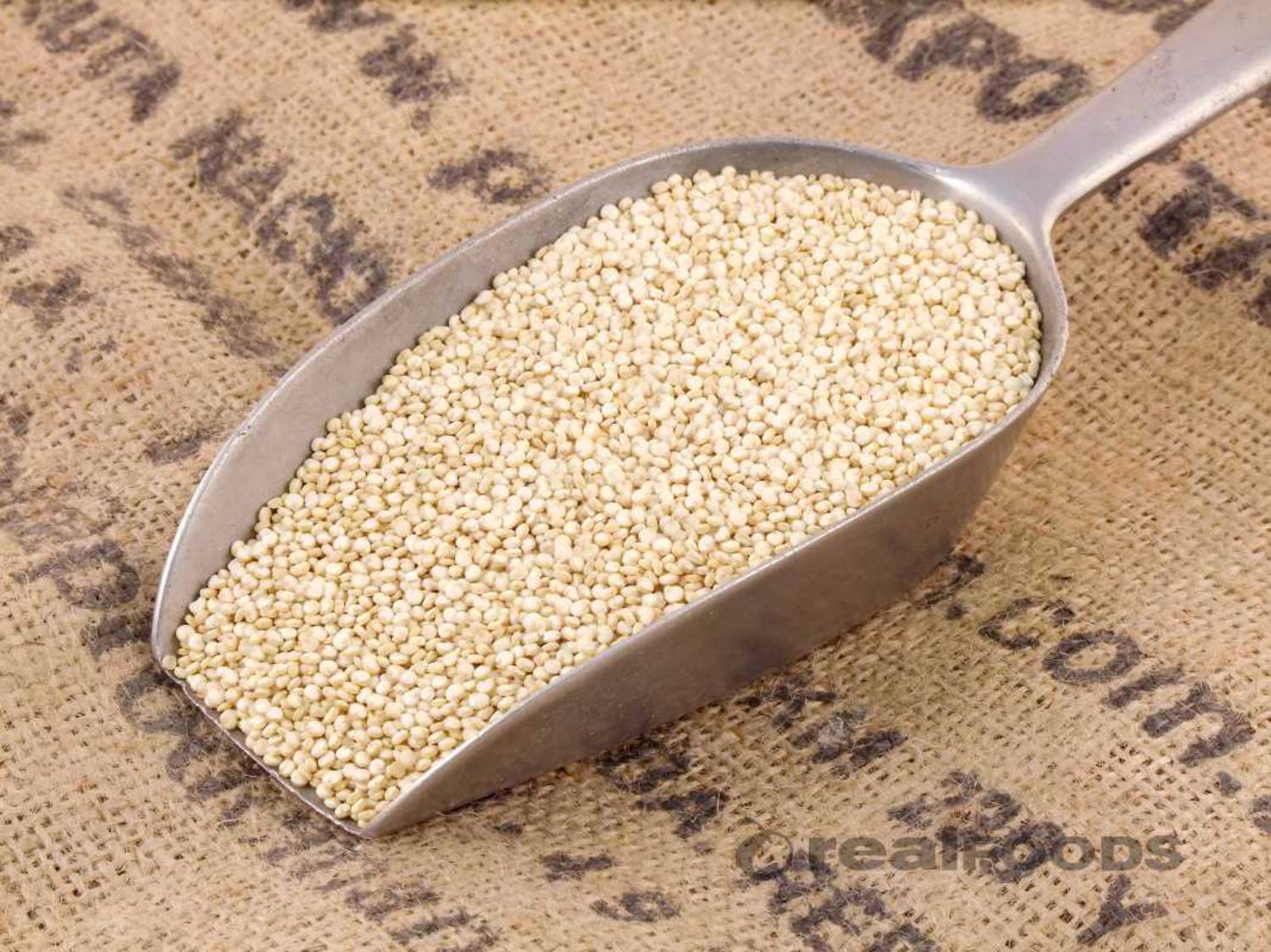
Quinoa is higher in nutrients than most grains having a crunchy texture and nutty flavour. It is gluten-free, so it can be enjoyed by individuals who are sensitive to gluten or wheat and has been shown to increase the nutrient and antioxidant value of gluten-free diets.
It is usually boiled and consumed as a side dish, as a breakfast porridge, added to salads, or used to thicken soups. The seeds can also be sprouted, ground and used as flour, or they can be popped like popcorn.
Quinoa is an excellent food for babies.
The carbohydrates in quinoa consist mainly of starch, insoluble fibres and small amounts of sugars. Quinoa also contains some resistant starch, which escapes digestion and feeds the friendly gut bacteria.
Quinoa is relatively high in protein compared to other grains, and is a complete protein, providing all the essential amino acids needed by the human body. It is also a good source of several minerals, including manganese, phosphorus, copper, folate, iron, magnesium and zinc.
Including quinoa in your diet may reduce blood cholesterol, blood sugar levels and triglycerides. It has a smaller impact on blood sugar levels than other gluten-free foods. Being high in protein and fibre quinoa has a relatively low glycaemic index value making it a weight loss friendly food.
Here are realplasticfree.com we have three different kinds of whole Quinoa: Quinoa, Red Quinoa and Black Quinoa.
Rice
One of the oldest grains, rice is believed to have been grown for at least 5000 years. It is a staple food for more than half of the world's population.
There are 2 main types of rice, unmilled rice (this is when only the outer husk is removed), milled rice (the husk, bran and occasionally germ layers are removed). Par-boiled rice (easy cook) is somewhere between the 2 and is steamed prior to the outer husk being removed or any milling.
Unmilled rice comes in a variety of shades, the most common are brown and black rice, but rice with purplish or reddish tones is also available.
Milled rice is white rice. This is the white kernel that is exposed in milling.
White rice is the most commonly consumed type, but brown (wholegrain) rice is becoming increasingly popular due to its health benefits. Rice is mainly composed of carbohydrates and the sticky varieties such as risotto, or pudding rice may cause spikes in blood sugar due to their quick digestion. Rice that tends not to stick together in cooking, such as basmati, is high in Amylose which slows down the digestion of starch making it less likely to cause unwanted blood sugar spikes.
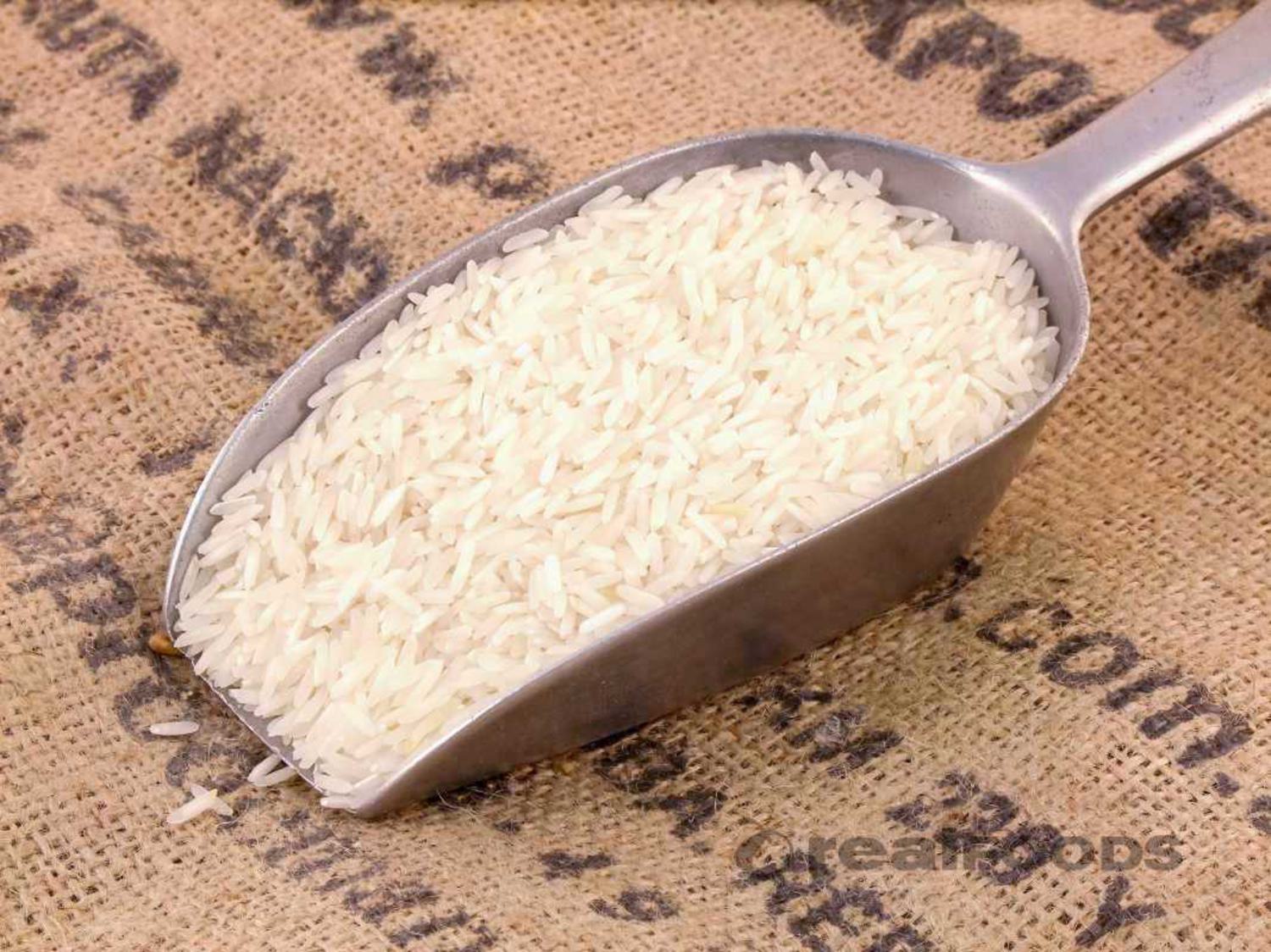
White rice contains virtually no fibre, whereas brown rice is a good source. Both types may also contain varying amounts of resistant starch, which may promote colon health.
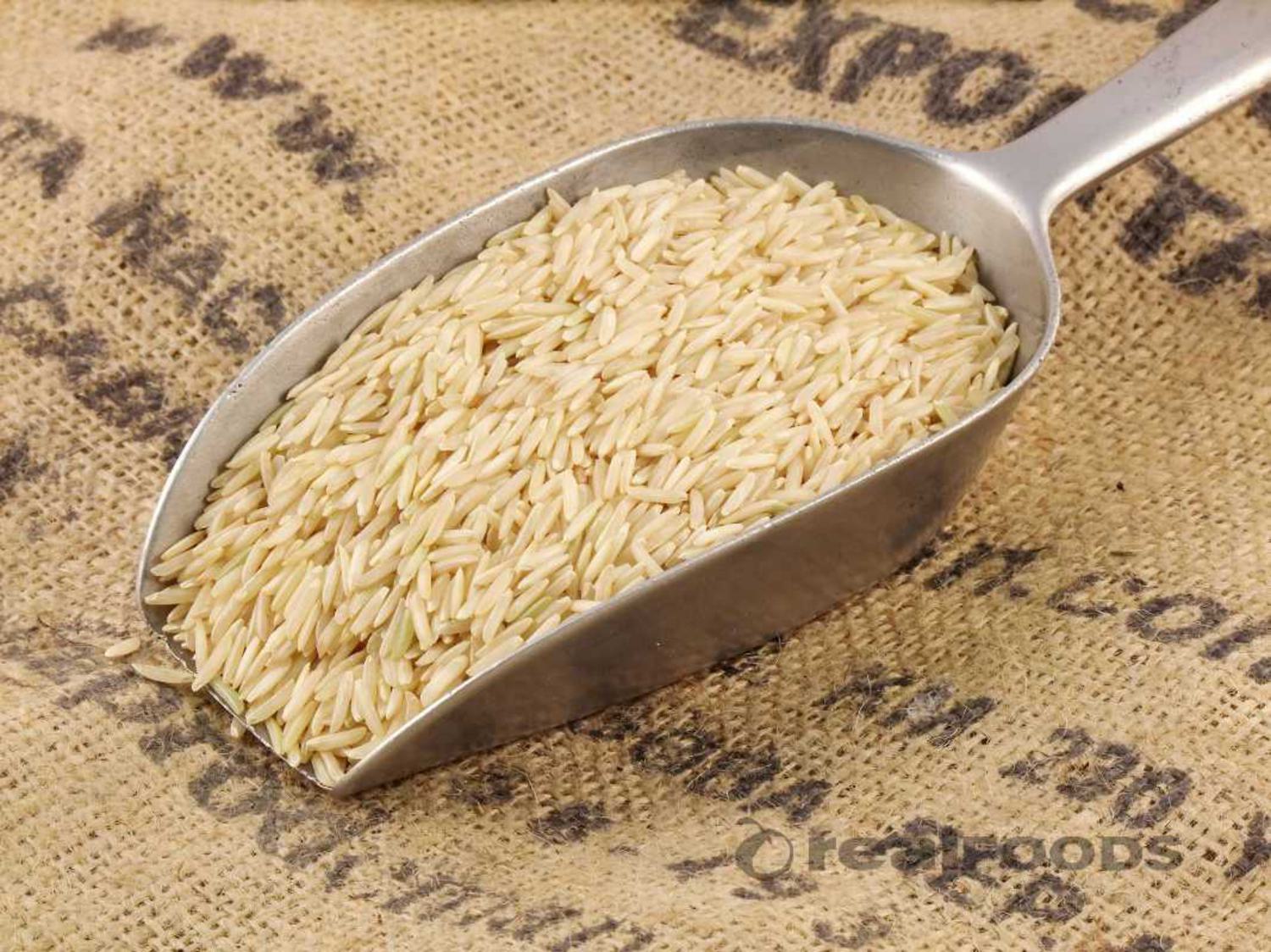
Brown rice is generally considered much healthier than white. This is because rice is generally a poor source of vitamins and minerals but considerable amounts may be concentrated in the bran of brown rice. White rice is also a poor source of antioxidants and other plant compounds. However, the bran of brown rice may be a good source of ferulic acid, lignans, and phytic acid. Brown rice contains several heart-healthy nutrients, so it may help prevent heart disease.
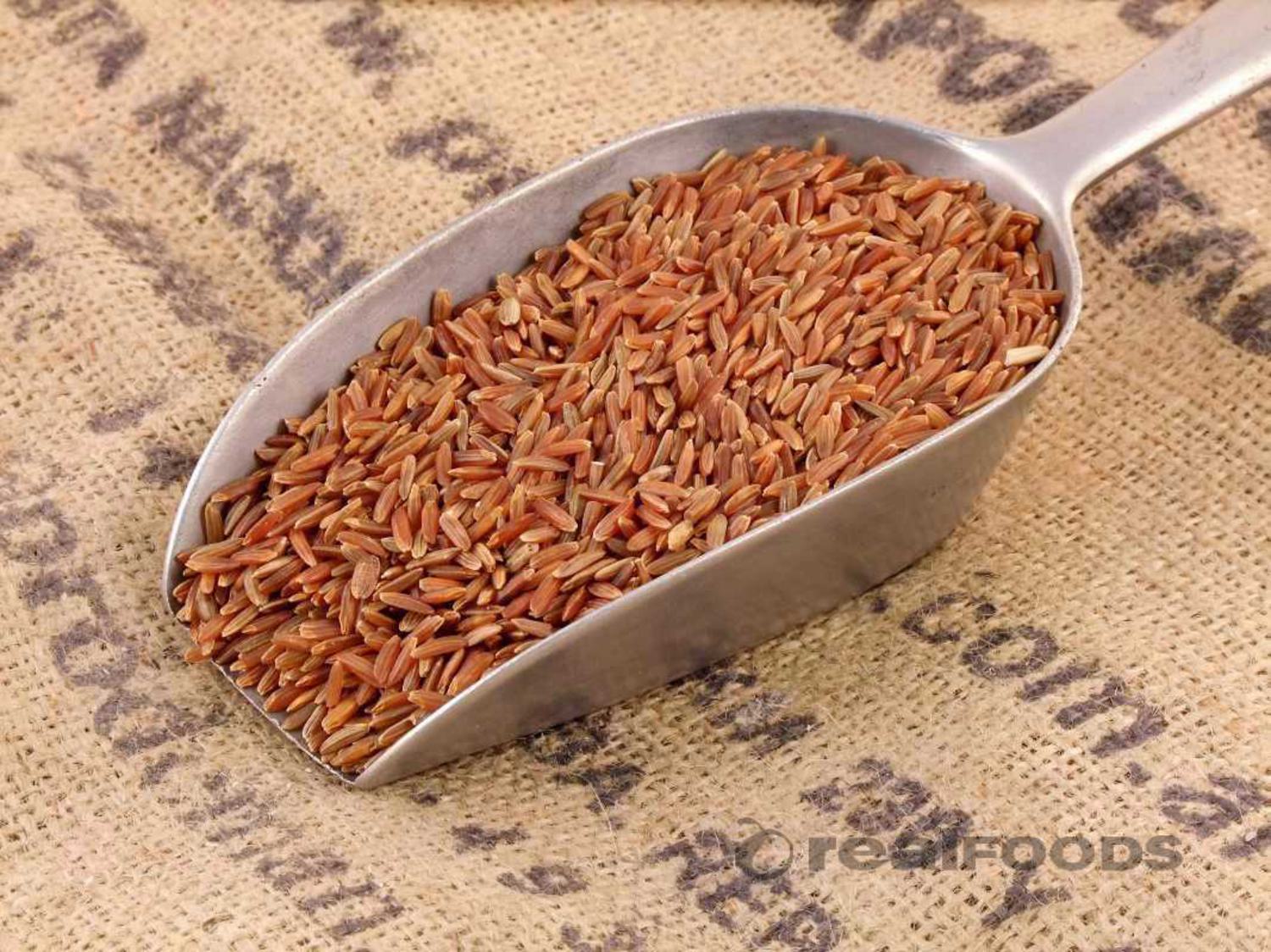
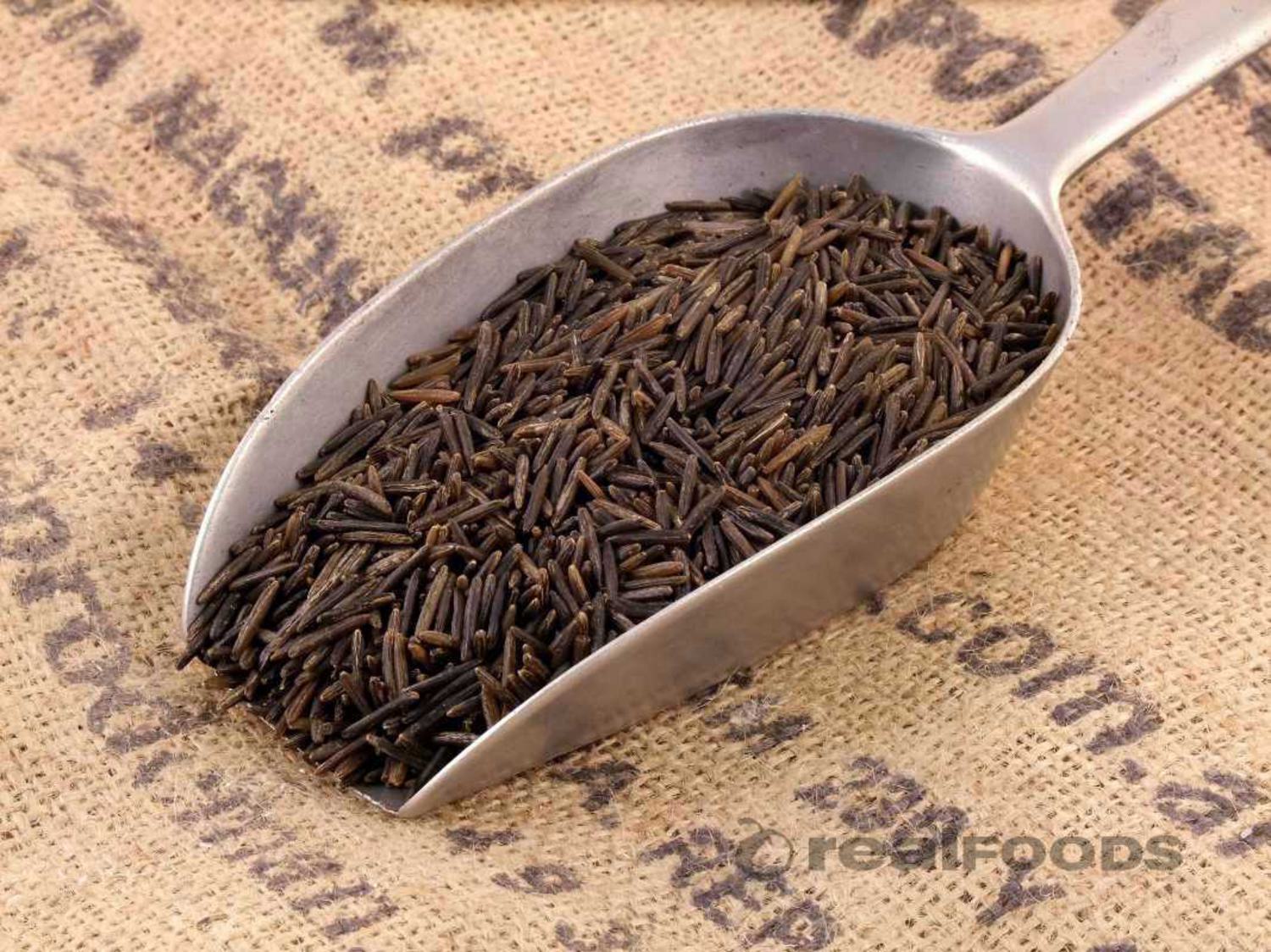
Try Red Camargue Rice for a distinctive dish, its red colour, firm texture and nutty flavour will make any salad much more interesting and it’s great as a side dish to add colour to a feast.
Wild Rice (technically speaking a grass) is a great addition to salads and side dishes to provide colour and texture. Wild rice usually takes around 45 minutes to cook but you can cut the cooking time by more than half if you use our pre-roasted Wild Rice 20min Cook variety.
Rye
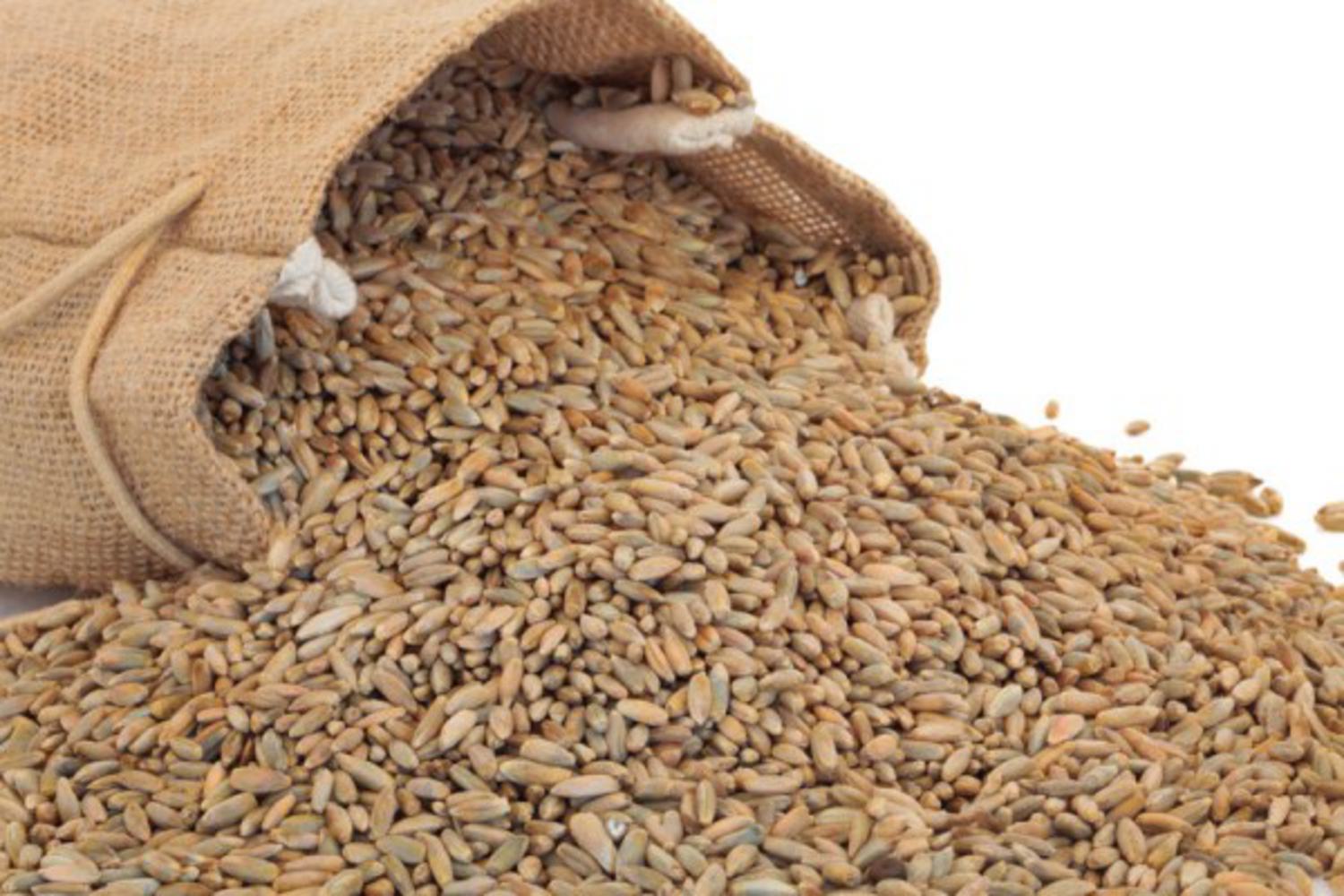
Rye grain is of the wheat tribe (Triticeae) and is closely related to barley and wheat. Extensively cultivated by the Romans, it is now mostly grown in Turkey. It has many of the same uses as wheat with the added bonus of being very important in the production of whisky!
Rye is brilliant at satisfying hunger pangs and because of the large molecules it is made up of, it is digested more slowly than wheat meaning that you feel fuller for longer and that there will be less of a spike in your blood sugar after eating. Rye is being studied for its effects on lowering blood sugar levels and lowering cholesterol. It can also help prevent gallstones from developing.
Rye contains gluten, so it is not suitable for coeliacs or people with gluten intolerances.
Wheat
Wholegrain wheat is a rich source of fibre, which may have positive effects on digestive health and may help to cut the risk of colon cancer.
Carbohydrates are the main nutritional component of wheat, however, it does also contain decent amounts of protein. This is mainly in the form of gluten, which may have adverse effects in people with coeliac disease or gluten sensitivity.
Wholewheat may be a decent source of several vitamins and minerals, including selenium, manganese, phosphorus, copper, and folate. Wheat bran (present in whole wheat) may contain a number of healthy antioxidants, such as alkylresorcinols and lignans.
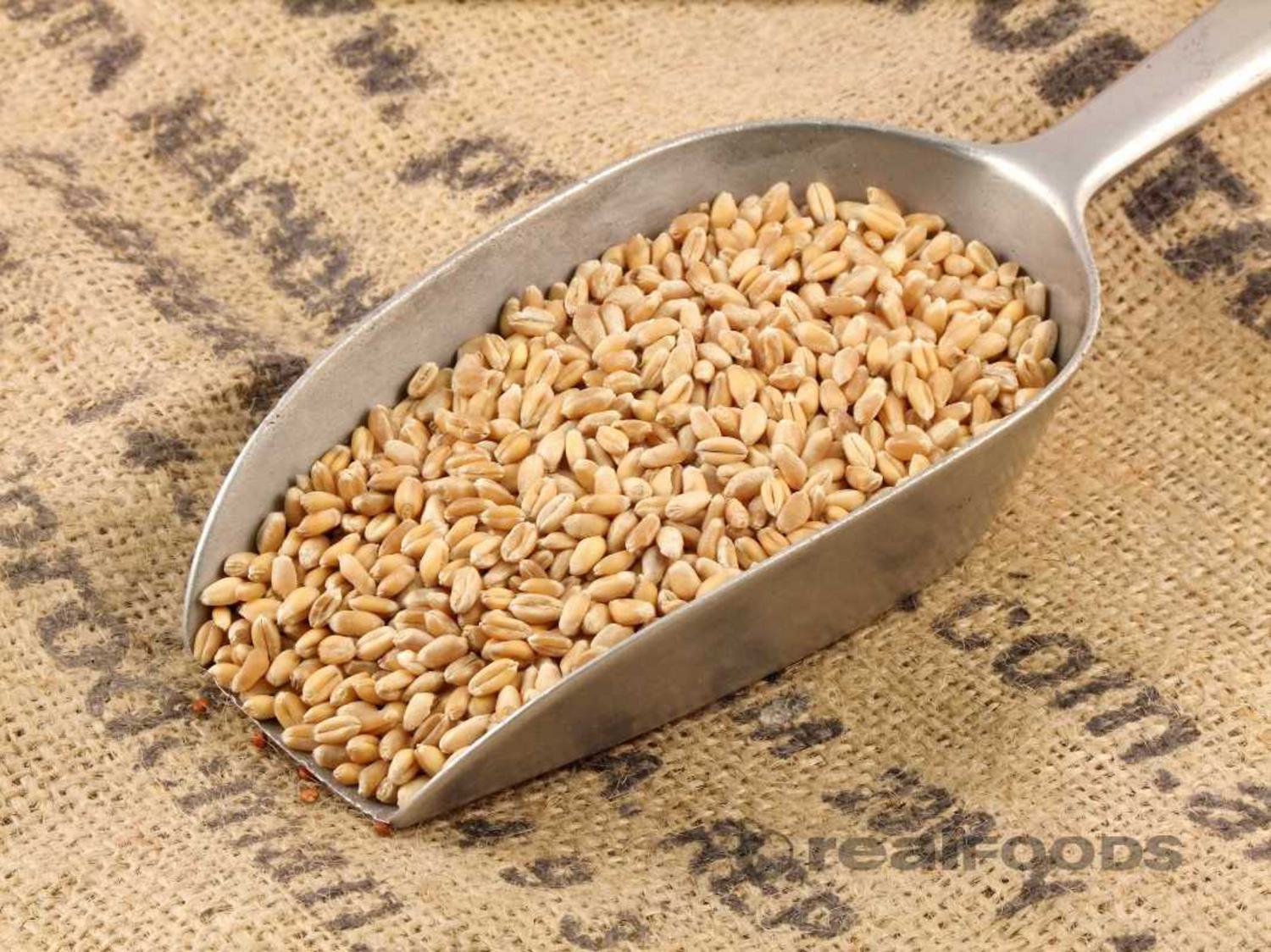
Raw wheat can be ground into Flour or (hard durum wheat only) crushed into Semolina, crushed into cracked wheat or (removing the bran) turned into bulghar. It's added to a huge array of baked and processed dishes.
For grinding into flour, sprouting or cooking with our Wheat Grain is extremely nutritious and tasty, retaining the goodness of the wholegrain
Khorasan Wheat is sold under the trademark Kamut and is around twice the size of modern-day wheat and has a delicious nutty flavour. Some studies show that people with a low allergy to wheat can tolerate Kamut better than other varieties, it has also got a low glycaemic index making it particularly suitable for diabetics.
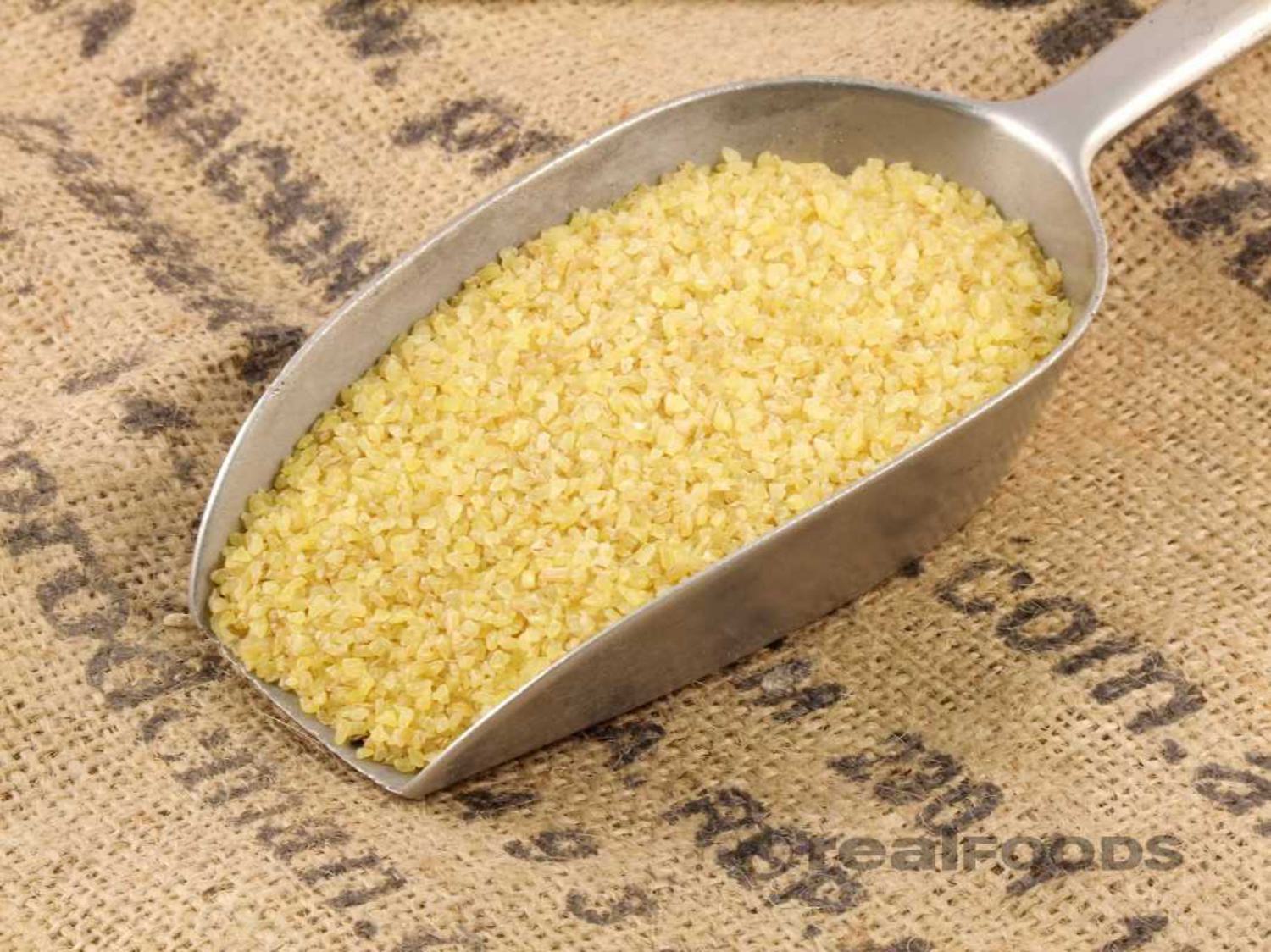
Bulgur is partially cooked wheat, the main ingredient in tabbouleh it's very popular in India as a convalescent food, being easy to digest and add wholegrain fibre to your diet.
Real Foods Organic & Essentials Ranges
Packed on site at Real Foods Edinburgh store for freshness and allow more flexibility in pack sizes, Real Foods pre-packs are a great buy.
The whole range that we sell is carefully packed in cellulose bags which Real Foods have been using for years. So you can buy them and enjoy them knowing that they are not costing the earth.
Our Organic range is all Soil Association certified and the labels bear the Soil Association logo – guaranteed 100% organic and GMO-free. Real Foods is licensed by the Soil Association to pack these products so you can buy them with confidence knowing that Real Foods comply with Soil Associations standards.
The Essentials range is not organic; however, it is GMO-free, top quality and great value for money.
Save money by buying larger sizes
With both the Essentials and Organic ranges, the more you buy the less you pay per 100g.
You can buy products from both ranges in many different weights in the Real Plastic Free shop, the minimum typically being 100g and the maximum being 1kg.
Take a look at any of these products on our website and you will see the pack sizes available for you to buy.
Contents
-
'Dear Plastic free Diary'
-
Your guide to living plastic free
-
Guide to Pulses
-
Guide to Grains
-
How to cook guides
-
How to cook Amaranth Seed
-
How to cook Roasted Buckwheat Kasha
-
How to cook Chickpeas
-
How to cook Red Lentils
-
Plastic free snacks
May 2024 Kim
What is Amaranth?
Amaranth is an ancient plant, once a staple of the Aztec and Inca diet. Also used for ritual purposes in these ancient cultures, its name means 'unwithering', and the plant was a symbol of immortality.
Amaranth seeds have a mild, nutty flavour. Used as a grain they are gluten-free and a good source of protein, fibre, calcium, iron, magnesium and vitamin C.
Store the seeds in an airtight container and keep in a cool, dry place away from sunlight.
How to Cook Amaranth?
Amaranth is at its most nutritious when cooked.
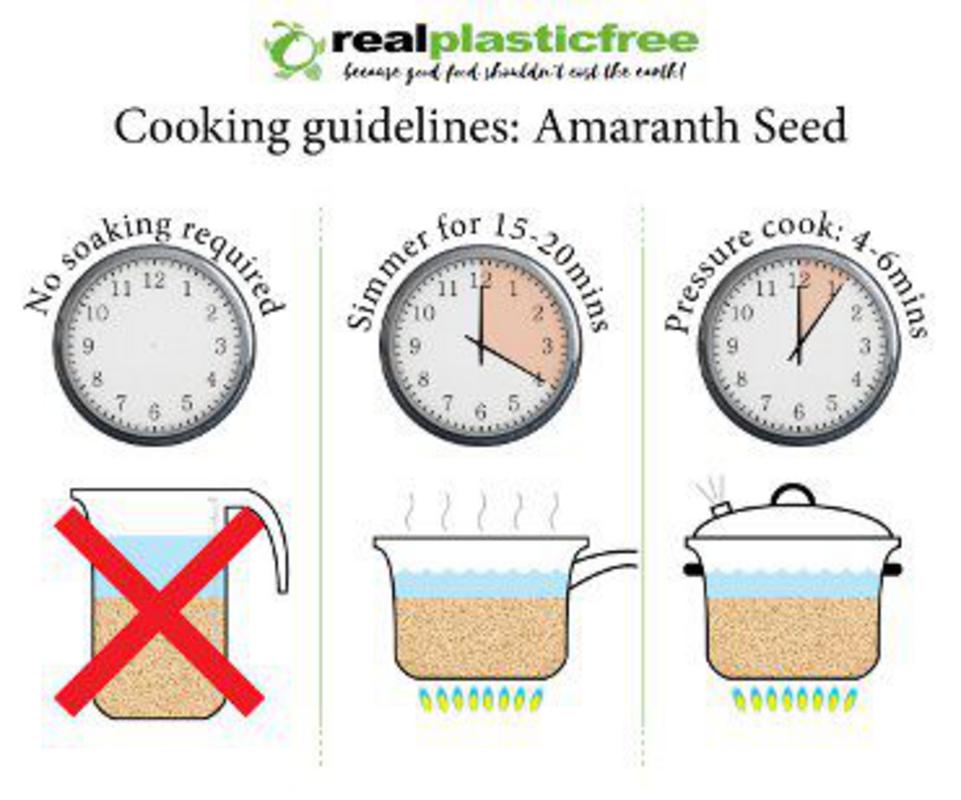
Bring one part grain to two and a half parts water to the boil then reduce the heat and simmer for around 20 minutes or until all the water is absorbed and the grain is fluffy. It can then be used as an alternative to rice, pasta or cous cous.
Amaranth can also be toasted like popcorn and mixed with honey then left to cool. This makes a sweet and crunchy Mexican treat known as Alegria, meaning 'joy'. (Try it and you’ll see why!)
It can also be sprouted, added to soups and stews to thicken, or made into porridge by increasing the amount of water to grain.
Contents
-
'Dear Plastic free Diary'
-
Your guide to living plastic free
-
Guide to Pulses
-
Guide to Grains
-
How to cook guides
-
How to cook Amaranth Seed
-
How to cook Roasted Buckwheat Kasha
-
How to cook Chickpeas
-
How to cook Red Lentils
-
Plastic free snacks
What is Roasted Buckwheat Kasha?
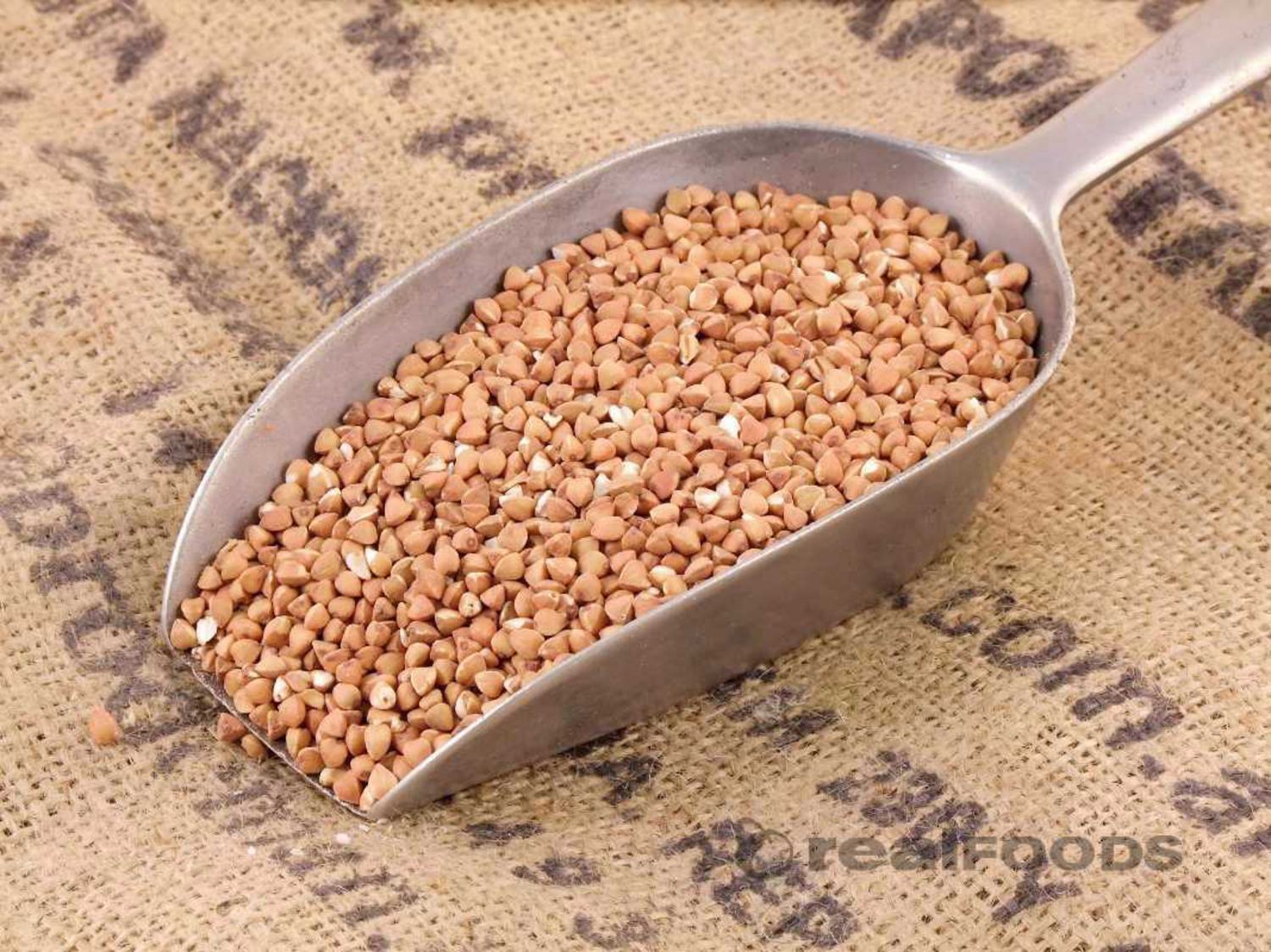
Buckwheat Roasted Kasha is made from hulled buckwheat. Known also as Buckwheat Groats, Kasha is an Eastern European version of porridge. It works well as a long-lasting breakfast with a slow release of energy.
Store in an airtight container and keep in a cool, dry place away from sunlight.
How to Cook Roasted Buckwheat?
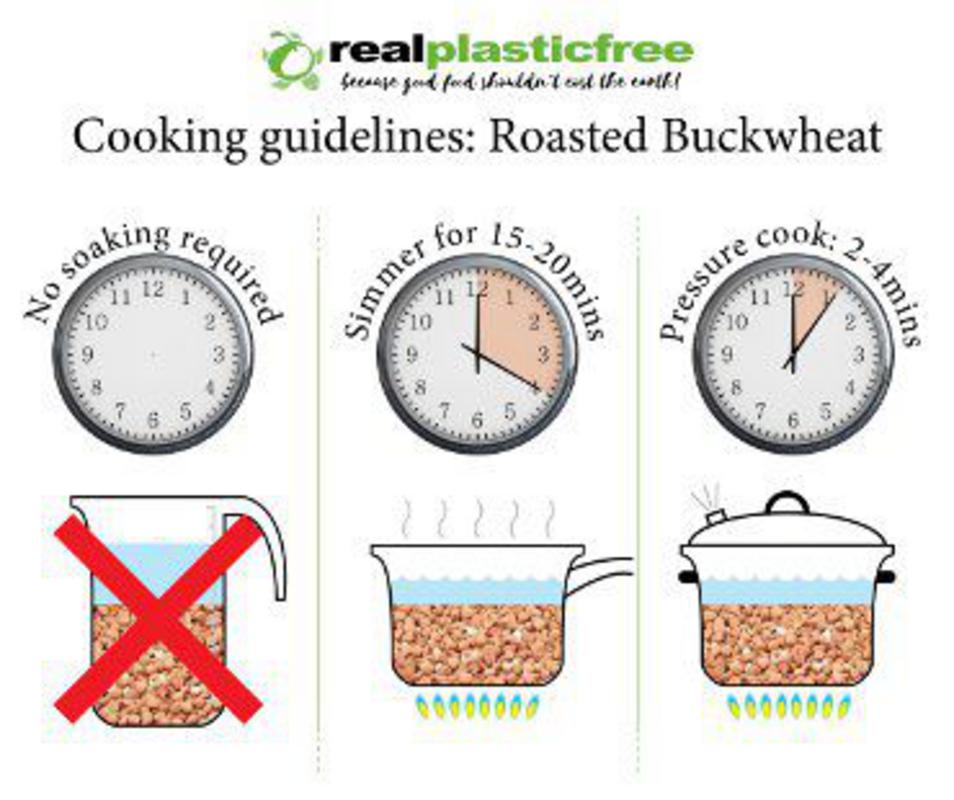
To cook, rinse 2-3 times in a bowl. Place the buckwheat in a pan, add 2 cups of water. Put on a medium high heat and cover the pan. After 15-20 minutes all the water will be absorbed and the buckwheat will be cooked.
For an alternative crunchier version, bring 2 cups of water to the boil, add the buckwheat, put on the lid and turn the heat down. After 15 minutes remove from the heat and let it sit for another 10 minutes. This will make the buckwheat porridge firm with a crunchy texture.
Contents
-
'Dear Plastic free Diary'
-
Your guide to living plastic free
-
Guide to Pulses
-
Guide to Grains
-
How to cook guides
-
How to cook Amaranth Seed
-
How to cook Roasted Buckwheat Kasha
-
How to cook Chickpeas
-
How to cook Red Lentils
-
Plastic free snacks
What are Chickpeas?
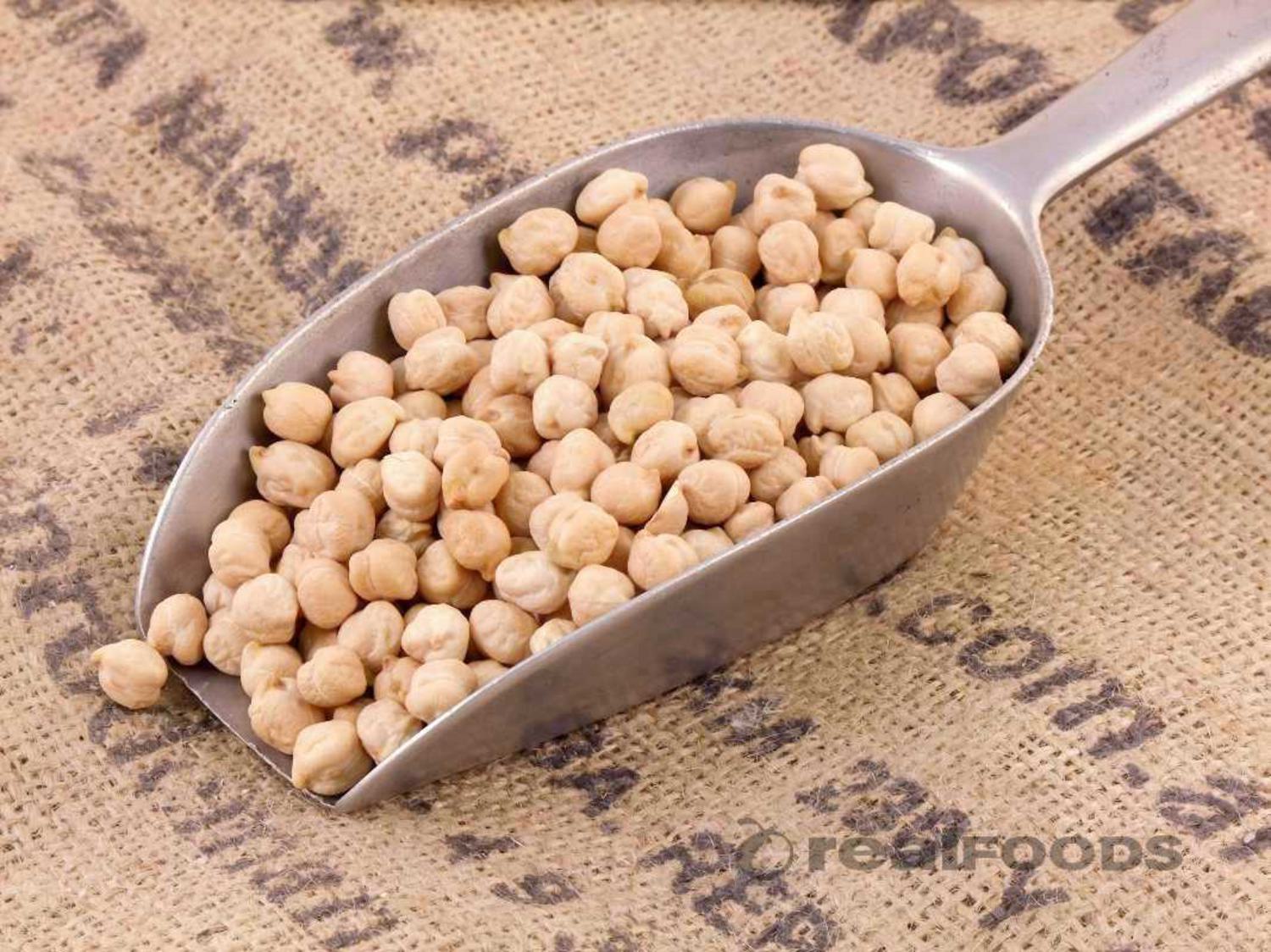
Chickpeas are a creamy-coloured, buttery and nutty-flavoured pulse, and may also be known as garbanzo beans. They are one of the world's oldest cultivated legumes. They originate from the Middle East and grow best in a tropical climate.
The Romans added chickpeas to broth and ate them roasted as a snack, while in ancient Greece they were used in desserts. In the modern-day Philippines, chickpeas are also used in desserts like halo-halo, meaning 'mix-mix', with candied fruit, shaved ice and evaporated milk. Chickpeas are a staple food in India, used in curries and dahl. They are the main ingredient of Middle Eastern hummus and falafel.
Chickpeas are low in fat, high in protein and very satisfying. They are high in fibre too, which helps to lower cholesterol and regulate blood sugar levels. They provide a source of the minerals folate, for a healthy heart and healing, immune-boosting zinc, plus a range of antioxidants.
Store dried chickpeas in an airtight container and keep in a cool, dry place away from sunlight.
How to Cook Chickpeas?
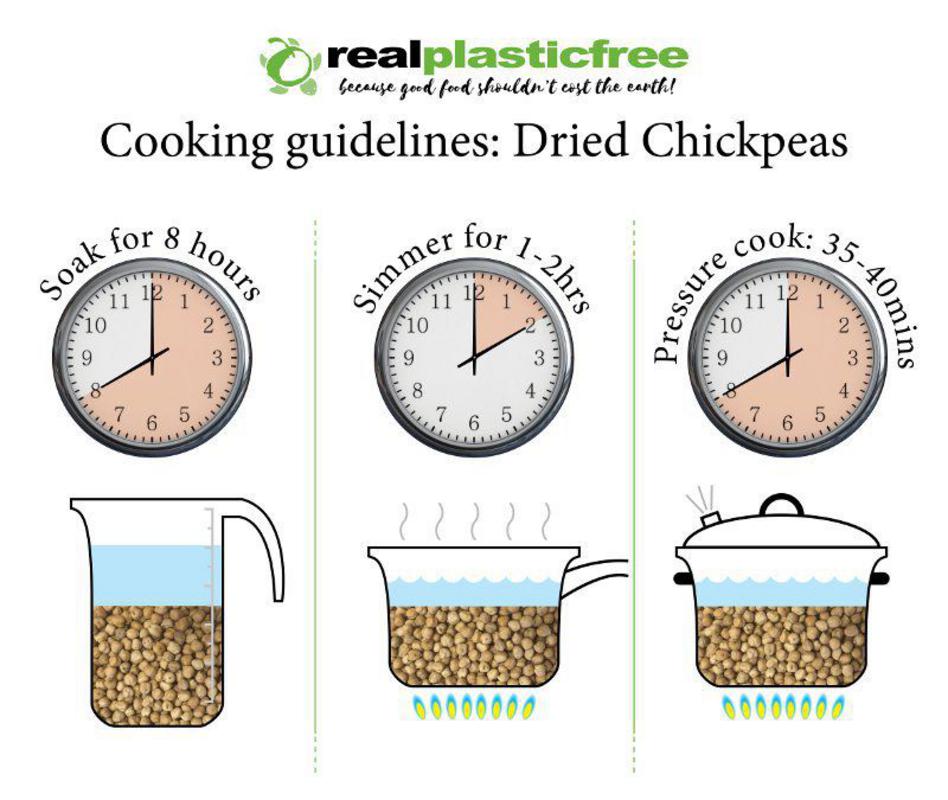
To shorten the cooking time and aid digestion, first, soak the dried chickpeas for at least a few hours but ideally overnight. The addition of bicarbonate of soda to the water will speed up the process. Another method is to bring them to the boil then turn off the heat and leave uncovered in the pan of water for one to two hours.
Once soaked, rinse them under running water and add to a pan with one part chickpeas to three parts fresh, unsalted water (salt will increase the cooking time). Bring to the boil in a partially-covered pan. Simmer for an hour or until tender, skimming off any foam that appears on the surface.
Soak: Yes (minimum 8 hours or overnight)
Cook: 1-2 hours simmering
Pressure cooker: 35-40 Mins
Pre-soaked & pressure cooker: 13-15 Mins
Contents
-
'Dear Plastic free Diary'
-
Your guide to living plastic free
-
Guide to Pulses
-
Guide to Grains
-
How to cook guides
-
How to cook Amaranth Seed
-
How to cook Roasted Buckwheat Kasha
-
How to cook Chickpeas
-
How to cook Red Lentils
-
Plastic free snacks
What are Red Split Lentils?
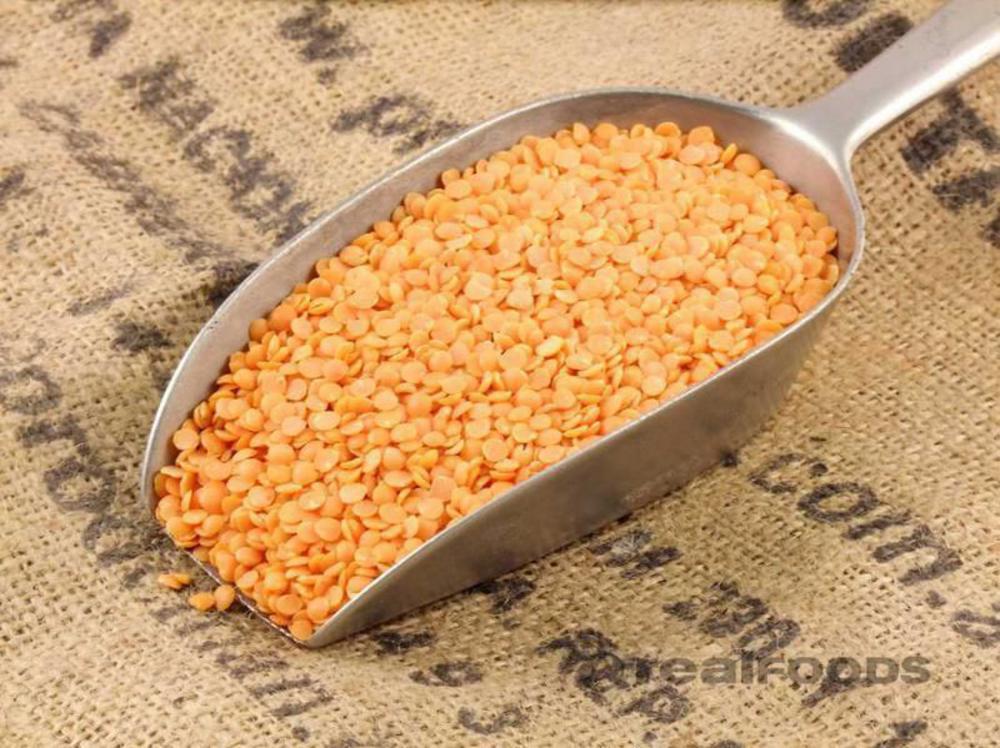
Red Split Lentils are by far the quickest to cook of the lentil family. They need no pre-soaking and as they are split (the skins removed so they split naturally into two halves), they cook very quickly.
With about 30% of their calories from protein, lentils have the third-highest level of protein, by weight, of any legume or nut, after soybeans and hemp. Proteins include the essential amino acids isoleucine and lysine. Red Lentils also contain folate, vitamin B1, minerals and dietary fibre.
Store lentils in an airtight container and keep in a cool, dry place away from sunlight.
How do I Cook Red Split Lentils?
First, wash and inspect the dry lentils. Simply pop them in a sieve under running water and check them for any debris and make sure they’re rinsed and clean.
Put them in a pan with water or broth (use 1 1/2 cups of liquid to 1 cup of lentils). Flavour with herbs, garlic or onions but DON’T USE SALT. Salt will toughen the lentils if added at the beginning of cooking.
Bring to the boil, then turn down and simmer. Stir them now and again to prevent sticking to the pan.
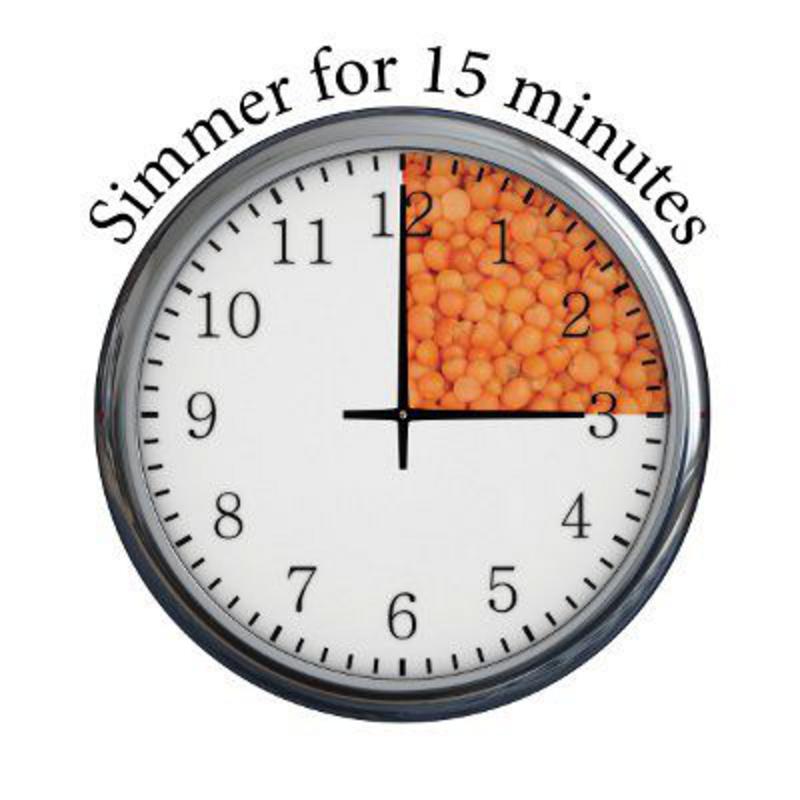
Cooking time depends on whether you want them for salads, a thick puree or to turn into mush. Around 15 minutes will start to turn them into a puree, 25 minutes you’ll have mush. Cook them for around 10-15 minutes if you want to use them in a salad, you want a tender but firm texture and for them to still hold their shape.
Soak: No
Cook: Simmer for 15-20 mins.
Pressure cooker: 4-6 min
Contents
March 2024 Ruth
Treat yourself without it costing the earth and keep healthy too!
We all enjoy a snack and if we choose our snacks carefully then they can be good for us, helping to keep blood sugar levels stable and staving off the hunger pangs.
Sometimes it can be difficult to know what to snack on, particularly if you want to avoid the ubiquitous plastic wrapping that so many snack bars are wrapped in.
Below are some suggestions for snacks that you can buy from our website, meaning that they are packed in cellulose bags that readily break down in your home compost bin.
Nuts and Seeds
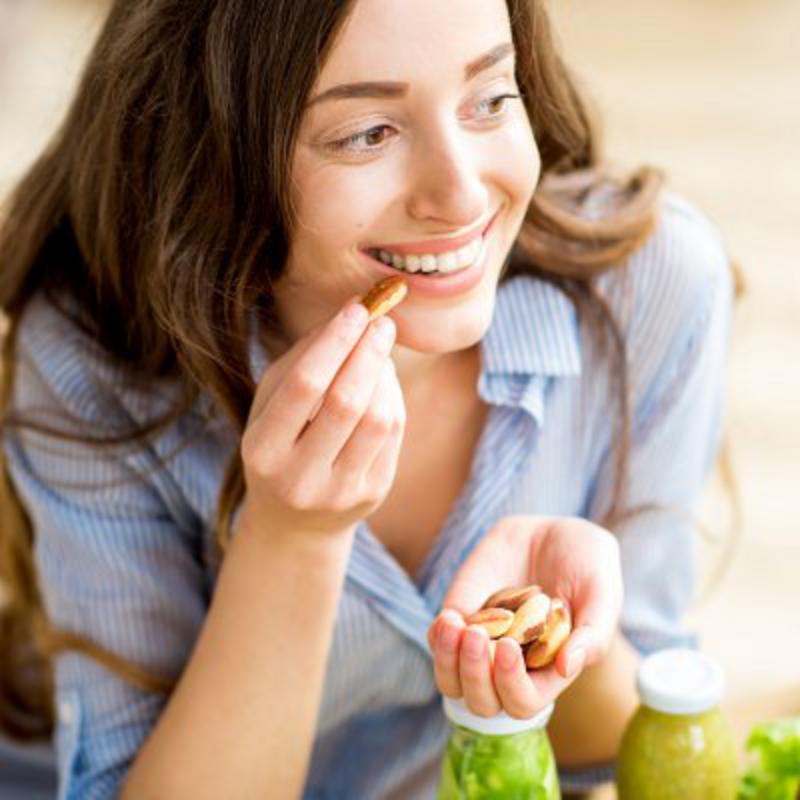
Nuts and seeds may be small in size, but they are big when it comes to nutrition. They are rich sources of vitamins and minerals; they are a good plant-based protein source and they also often contain monounsaturated fats, essential omega-3 fatty acids and phytosterol phytonutrients that do wonders for promoting overall health.
Best eaten raw, they are delicious, nutritious and highly portable.
What are the health benefits?
Almonds, peanuts and walnuts are three of the worlds healthiest nuts and eaten every day in small quantities have been shown to reduce the risks of heart disease and strokes when eaten as part of a healthy diet.
Many nuts and seeds are concentrated sources of "good fats" such as omega-3 essential fatty acid, alpha-linolenic acid (ALA) as well as heart-healthy monounsaturated fats, such as oleic acid.
Nuts and seeds are great for satisfying your appetite. They fill you up and provide long-lasting energy through the day whilst maintaining stable blood sugar levels.
Although nuts and seeds are high in calories, a small amount will go a long way in sating your hunger. Therefore, you often end up consuming fewer calories than when you eat other foods which contain fewer calories but do not sustain you for the same length of time.
How much should I eat?
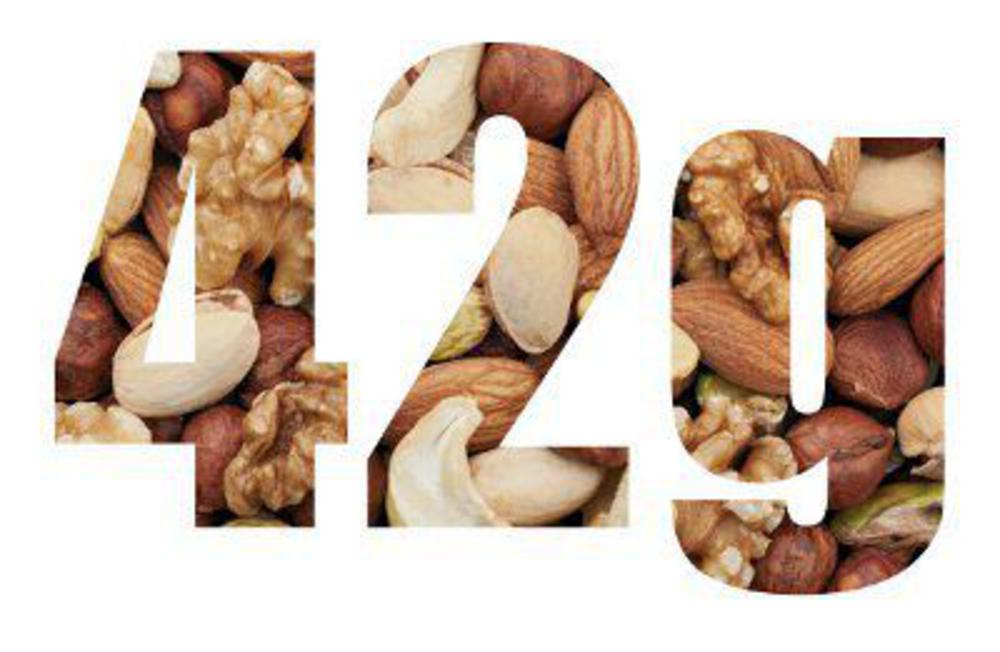
Leading health organisations recommend five servings of nuts and seeds every week. For optimum benefits, it may be best to eat 42g of nuts or seeds every day. You can easily achieve this by having a snack of nuts, seeds or a mixture either mid-morning or mid-afternoon.
Dried Fruit
Dried fruit is fruit with most of the water content removed. You can find all kinds of dried fruit from apples to white mulberries, the most popular include raisins, dates, prunes, figs and apricots.
What are the health benefits?
Dried fruit is rich in fibre, vitamins and minerals. Dried fruit generally contains more fibre than the same-sized serving of their fresh counterparts and fibre helps to keep your digestive system running smoothly.
Dried fruits are also a rich source of antioxidants. Because most of the water is extracted from dried fruits, their nutrients are condensed into a small package. Dried fruits like apricots, raisins, prunes and figs contain high amounts of beta-carotene, vitamin E, niacin, iron, magnesium, potassium and calcium,
Eating dried fruit can easily increase your intake of nutrients. They also contain significant calories per serving, making them a natural source of energy for athletes. Dried fruit contains little to no fat so they are a good supplement for people seeking to gain weight in a healthy way.
Eating raisins may improve blood sugar control and lower blood pressure while eating prunes is a great way to add a natural laxative to your daily diet.
How much should I eat?
There is a 'BUT' though. Dried fruits are relatively high in calories and sugar - up to 66% sugar in the case of dates. Eating too much of any dried fruit can, therefore, contribute to weight gain.
So enjoy your dried fruits by the handful, not by the bowlful!
Contents
-
'Dear Plastic free Diary'
-
Your guide to living plastic free
-
Guide to Pulses
-
Guide to Grains
-
How to cook guides
-
How to cook Amaranth Seed
-
How to cook Roasted Buckwheat Kasha
-
How to cook Chickpeas
-
How to cook Red Lentils
-
Plastic free snacks